
Last updated November 25, 2026
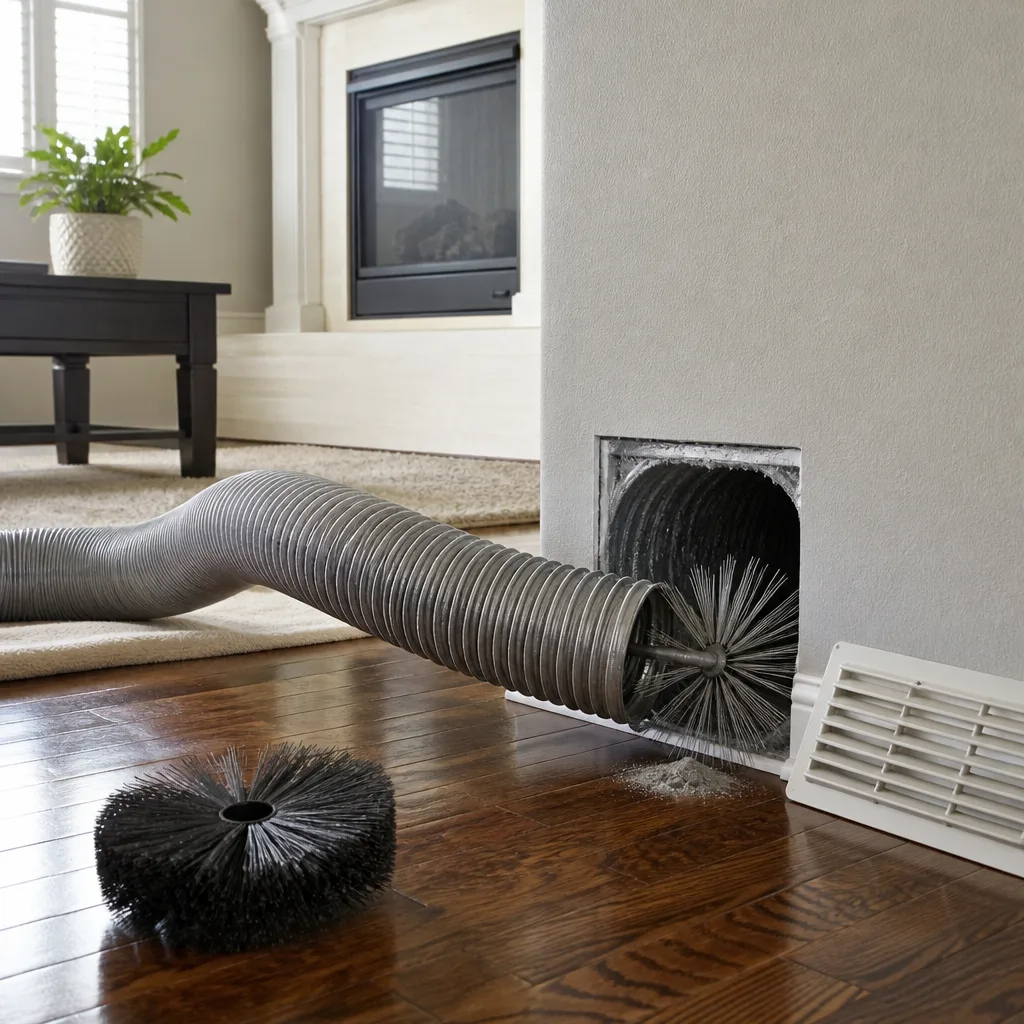 Whole-home duct cleaning
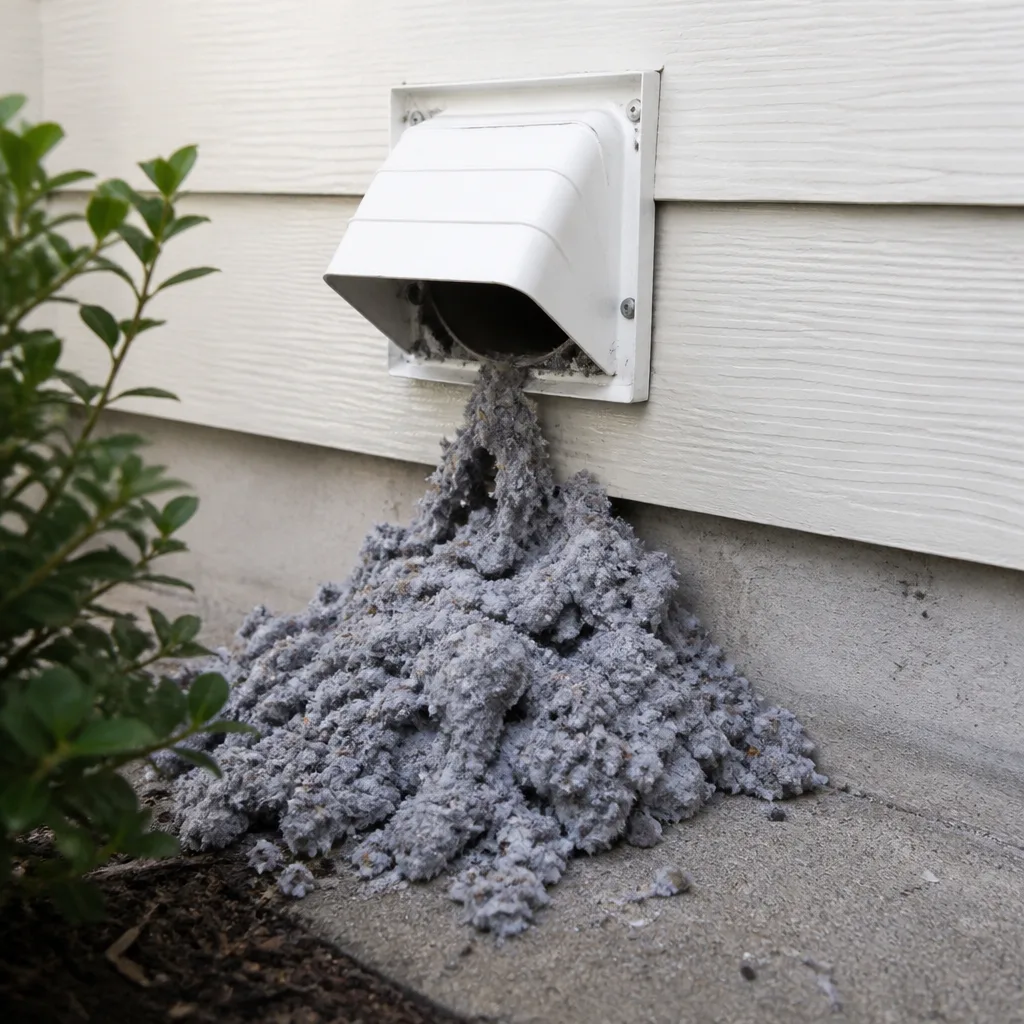 Dryer vent cleaning
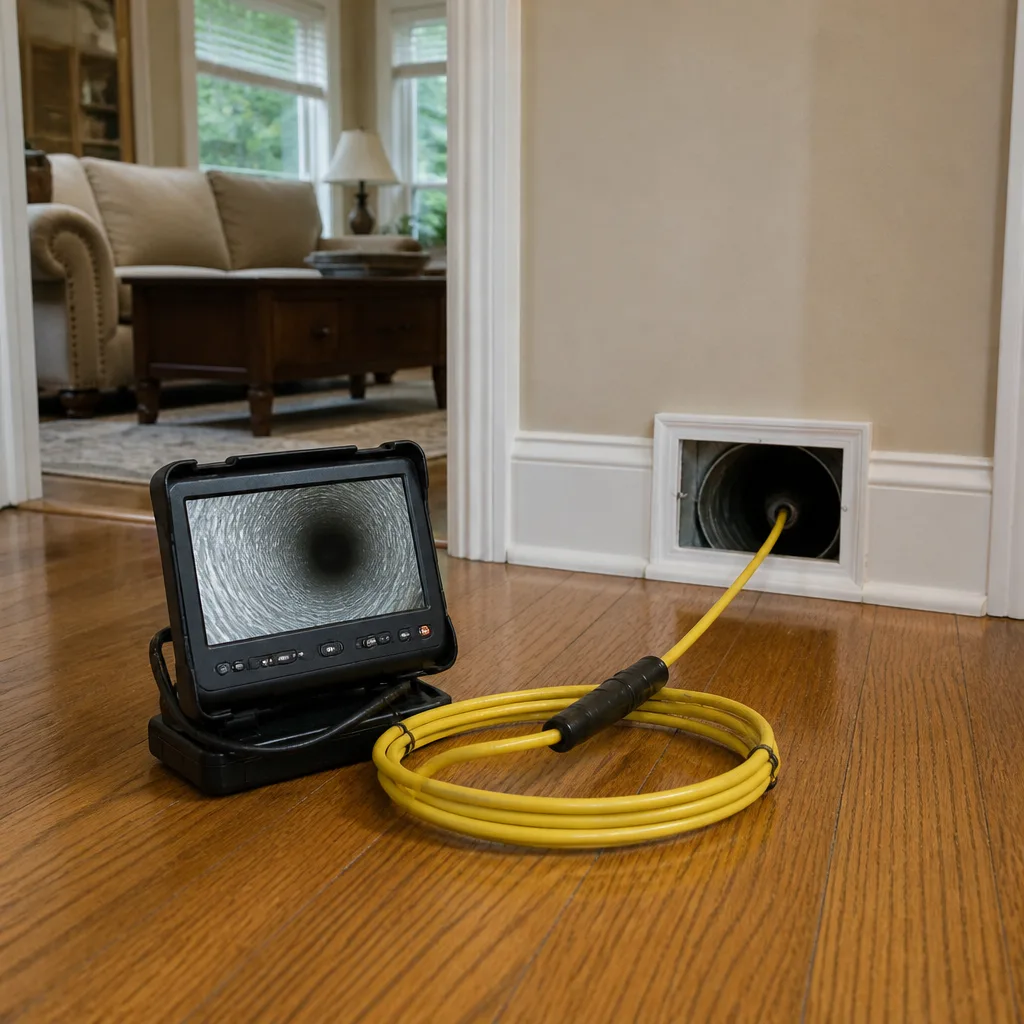 Camera inspection
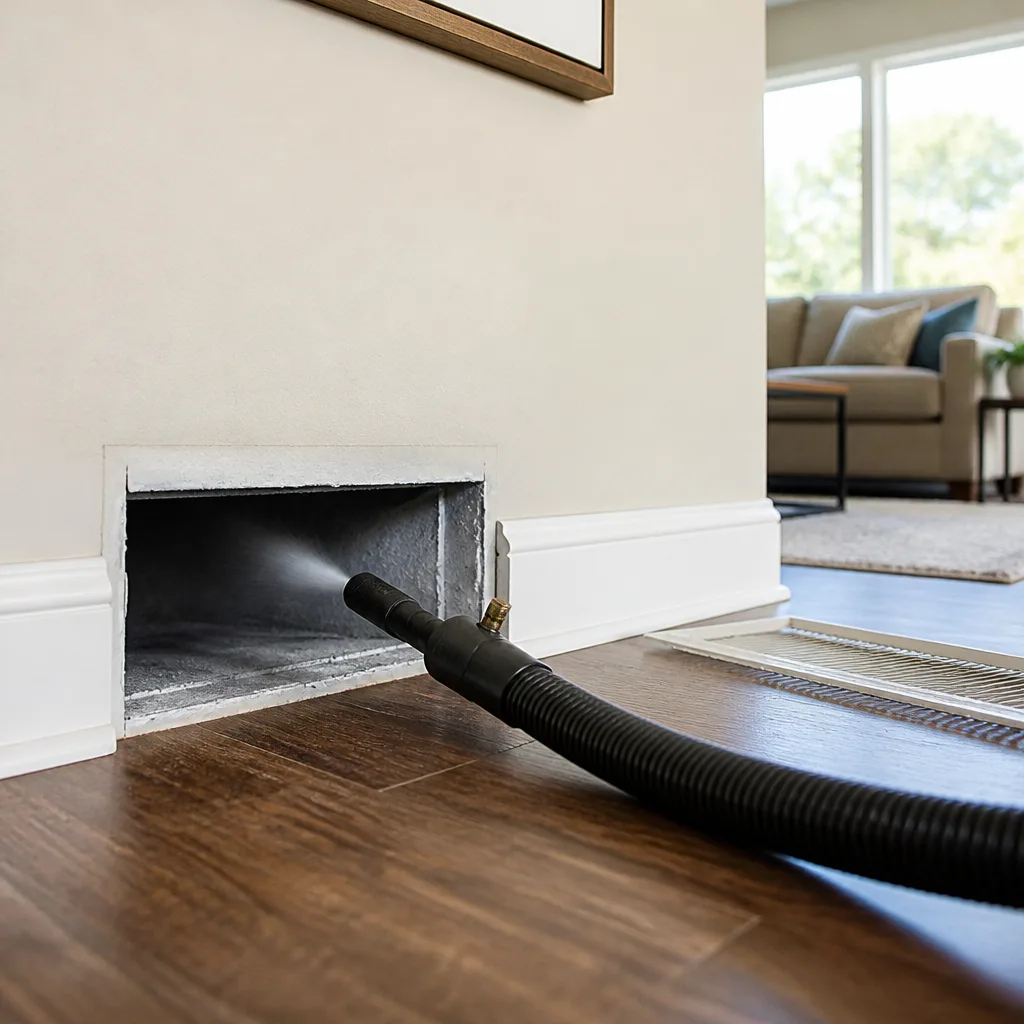 Sanitizing & deodorizing
Whole-system duct and dryer vent check with before-and-after photos - you see exactly what came out of your vents
That "$99 whole-house special" is a bait ad - the real number appears once they are in your hallway, or the "clean" is a shop-vac at the register. We photograph the inside of your ducts before and after instead.
Air Duct Cleaning Warning Signs: A Knoxville Homeowner’s Reference Guide
Two homes can both smell musty, and the fix for each can be completely different. One problem lives in a wet coil inside the air handler. The other lives in degraded fiberglass liner inside the ducts themselves. They call for different tools, different access points, and sometimes a completely different service than the homeowners expected when they picked up the phone. That gap between “something is wrong” and “here is what’s actually wrong” is where most bad duct-cleaning decisions get made. In this reference guide, we’re mapping the symptoms Knoxville homeowners describe to the specific locations and causes inside the air pathway that produce them, so you can describe the problem accurately, ask better questions, and know what you’re authorizing before a technician starts work.
Quick Answer
The main warning signs of a duct system that actually needs professional attention are: visible debris or dust plumes at supply registers, odor that appears only when the blower runs, odor that never goes away, black streaks around register frames, worsening allergies tied to the HVAC cycle, and debris introduced by a renovation, pest treatment, or water event. Normal dust on a register cover is not the same thing. The sign that matters is what you can see and smell coming out of the system when it’s running.
Table of Contents
- Normal Dust vs. a Real Warning Sign
- Mapping Symptoms to Locations in the System
- Odor: When the Blower Is Off vs. When It’s On
- Black Streaks, Bypass Leakage, and What They Mean
- Warning Signs in Knoxville’s Older Housing Stock
- Household Symptoms and What They Point To
- Warning Signs After Renovations, Pest Treatment, and Water Events
- How a Proper Duct Inspection Works
Normal Dust vs. a Real Warning Sign
Every supply register in every home collects dust on the grille face. That’s air moving across a surface, and a light film that wipes away clean is normal housekeeping, not a red flag. What separates normal accumulation from a functional warning sign is location and behavior. Dust on the face of the grille is expected. Dust blowing out of the slots when the fan starts is a different matter entirely.
Here’s how to tell them apart:
- On the grille face, wipes clean: normal. Reinforced by suction pulling ambient dust toward the register.
- Blowing out of the slots as visible plumes when the blower starts: the branch duct or boot above that register is carrying loose debris.
- A dark halo ring on the drywall or ceiling around the grille: air is escaping around the register frame rather than through the vent. That’s a sealing issue as much as a cleaning one.
- Dust patterns that are heavier at the farthest registers in the system: the branch ducts at the end of a long run are typically the first to load with debris.
- Dust that reappears on furniture within days of cleaning the whole house: debris is being reintroduced from inside the air pathway rather than settling from the room.
In Knoxville, the yellow-green pollen load each spring makes those first two signs easy to confuse. Pollen coats register faces fast, and a homeowner will often wipe the grilles and assume the ducts are dirty. The distinction still comes down to whether the material is coming out of the system or settling onto it. A register that stays clean after a wipe is telling you something different from one that starts blowing visible dust again within a day.
One more normal-versus-real distinction: a light dust film inside an intake return grille is expected because that’s where your system pulls room air in. A return that develops a visible mat of debris or pet hair in a short window suggests either a filter bypass problem or an oversized return. Both are worth a professional look during a routine air duct cleaning assessment.
Mapping Symptoms to Locations in the System
Most duct cleaning “warning sign” lists stop at describing symptoms. The more useful exercise is matching the symptom to the physical location in the air pathway that produces it. A resident air-pathway system has several distinct zones: the return inlets, the return trunk, the air handler and blower cabinet, the evaporator coil, the supply trunk, the branch ducts, and the boots and registers at the wall or floor. Each zone fails in its own way.
Use this map to help describe the problem when you call:
- Visible debris at the register or boot: branch duct and boot contamination. The register and boot are the endpoint of a long run of flex or rigid duct, and it’s where debris accumulates most easily.
- Odor that appears only when the blower is running: the evaporator coil, the condensate drain pan, or the insulated interior of the air handler. Airflow is picking up the smell as it passes through that zone.
- Odor that’s constant, blower on or off: contamination in the duct liner, insulation, or a dead animal within the duct run. There’s no airflow needed for the smell to reach the room.
- Black streaks or a dark perimeter ring at the register frame: bypass leakage. Air is escaping around the boot-to-drywall gap, often because the seam is unsealed and pulling return air from inside the wall cavity.
- Reduced airflow at specific rooms only: a disconnected, crushed, or kinked branch duct, which is common with flex runs that have shifted over time.
- Rattling or whistling at the register: loose boot-to-duct connections or undersized branch duct, both worth flagging alongside a cleaning.
Framing your request this way does two things. It tells a professional what equipment and access points the job will likely require, and it puts down on paper what you’re authorizing. That’s the difference between “clean my ducts” and “clean the supply branches, assess the coil, and inspect the boot-to-drywall seals at registers.” We’ve walked into Knoxville homes where the homeowner was quoted a generic vent-cleaning job when the real issue was flex duct sag, and we’ve walked into homes where a thorough cleaning plus a sealing pass resolved a problem a cleaning alone would have missed.
The full air-pathway approach matters here: cleaning, repair, sealing, and sanitizing are distinct steps, and a good assessment tells you which of those are needed and which are not. Our technicians have up to 8 years of experience reading these cues, and the location on the map above is where every conversation starts.
Odor: When the Blower Is Off vs. When It’s On
This is the single most useful diagnostic distinction a homeowner can make, and it’s the one most guides skip. Timing of the odor narrows the problem to a much smaller part of the system.
Odor only when the blower is running: the smell is being carried to you by airflow, which means its source is somewhere along the air path but upstream of the supply registers. The most common locations are the evaporator coil and its condensate drain pan (a wet, dark, biologically active surface), the interior insulation of the air handler cabinet, or a damp spot inside a supply trunk. When the fan stops, the odor stops with it. A musty smell that appears every time the system starts up and fades after the system runs a couple of minutes most often points to the coil or drain pan. In Knoxville, where summer humidity runs high and the coil is wet for months on end, the drain pan is a frequent contributor, and it’s a zone a duct cleaner needs to access deliberately, not one you reach by vacuuming from the vent.
Odor that is constant: the source isn’t airflow-dependent, which moves the suspect to duct liner or insulation, or to something that has gotten into the duct run. In older Knoxville homes with flex duct installed before 2000, the interior fiberglass liner can degrade and become a host surface for microbial growth and odor. Pest intrusion is another constant-odor cause, and it doesn’t smell the same as liner degradation: liner usually reads as musty and closed-in, while pest intrusion has its own sharper signature. Both require a different response than a routine cleaning, and both require the technician to physically inspect the contaminated zone rather than assume the problem is at the register.
A chemical smell right after pest treatment or painting: see the section on triggering events below. Don’t let a routine cleaning be scheduled first. The order of operations matters.
If you’re unsure which category your odor falls into, note the timing. Does the smell arrive when the thermostat calls for cooling, or is it already there when you walk into the room? That single detail will save a technician a half hour on-site and get you a more accurate estimate.
Black Streaks, Bypass Leakage, and What They Mean
A dark, sooty-looking streak bleeding out from around a register frame is one of the most misread signs in the business. Homeowners assume it means the ducts are dirty. Usually it means air is escaping through a gap that shouldn’t exist, and the soot is being deposited on the drywall surface because of that leakage.
Here’s the mechanism. Registers and return grilles mount to the drywall or plaster through a boot, and the boot is supposed to be sealed to the wall surface. When that seal fails, whether because of an installation that was never sealed or a gap that opened over time, the system pulls air from the wall cavity around the register rather than through the duct. That cavity air is unfiltered and often dusty. The result is a visible dark perimeter around the register, plus air-quality problems you didn’t have before the seal failed.
Black streaks point to three distinct service items:
- Sealing: the boot-to-drywall joint needs to be sealed properly with mastic or an air-sealing method appropriate for the substrate.
- Cleaning the cavity-influenced zone: the debris that has been drawn into the boot and branch duct through the leak.
- Assessing the whole trunk’s sealing condition: where you find one failed joint, others are usually nearby. Knoxville homes built in the 1970s and 1980s commonly have original metal ductwork that was sealed with mastic which has since dried, cracked, and separated at the seams.
This is where full-system scope matters. A company that only offers cleaning can dust off the register and the branch behind it, but it can’t close the failed seam that caused the problem, and the streaks return within a season. Duct repair and sealing are where cleaning stops being cosmetic and starts solving the actual problem.
Two quick checks you can do that don’t require any tools. Hold your hand near the register frame on a hot afternoon with the system running, and feel for air moving along the wall surface outside the grille. Then look at the drywall around the register from an angle – the streak is easiest to see in raking light. If you feel or see either, put it on the list for your estimate. On our Knoxville air duct cleaning experts page, we walk through how we scope these jobs.
Warning Signs in Knoxville’s Older Housing Stock
Duct systems age differently depending on when and how they were installed, and Knoxville’s housing stock spans enough decades that the warning signs split cleanly into eras. Knowing which era your home falls into gives you an immediate shortlist of problems to check.
Flex duct installed before 2000. Flex duct uses a plastic jacket, a wire helix, and in many products a fiberglass liner on the interior. Over decades, the liner begins to break down and shed fibers into the airstream, and the plastic jacket becomes brittle and develops pinhole tears. Warning signs: visible fiber or powdery liner material in the register boot, an airstream that produces a slight plasticky or musty smell, or a branch duct that has lost its shape and is sagging between hangers. A sagging flex run restricts airflow and traps debris on the low side of the sag.
Homes built in the 1970s and 1980s with original metal ductwork. This generation of ductwork was frequently sealed with mastic at the seams and joints, and mastic degrades. The failure mode isn’t sudden – it’s a slow opening of seams over years, which shows up as lost airflow to distant rooms, streaks at registers, and dust coming from the return trunk. Warning signs: black streaks (covered above), reduced airflow in bedrooms at the far end of a trunk, and a return grille that seems to pull weakly. These systems often benefit from a sealing pass alongside cleaning.
Homes that have had multiple HVAC replacements over the decades. A new air handler hooked up to old ductwork is a common setup, and the mismatch between system capacity and duct sizing is often overlooked. That shows up as noisy airflow, a system that struggles to heat or cool specific rooms, and register dust patterns that concentrate at a few problem branches. When we do an HVAC cleaning in a Knoxville home like this, the assessment always includes checking whether the duct system is a match for the equipment it’s attached to.
Older homes with an addition or remodel. Additions often splice into the original trunk or run new branches with different material than the original ductwork. Check the registers in the addition first: they typically sit at the end of a longer or tighter run and show debris problems before the original rooms do.
Household Symptoms and What They Point To
Duct and air-quality problems show up in people, not just in the duct system, and the timing of those symptoms is another diagnostic clue. We’re not doctors and we don’t diagnose medical conditions, but the pattern of symptoms that comes and goes with the HVAC system is worth paying attention to.
Seasonal, spring-timed symptoms. Knoxville’s spring pollen load is intense and predictable. When symptoms correlate with the pollen season specifically, the main driver is very likely outdoor pollen being carried into the home. The duct system contributes by delivering that pollen through the supply registers, and filtration and sealing matter as much as cleaning. If the return filter isn’t well-sealed to its frame, pollen bypasses the filter and goes straight into the coil and ducts. A proper assessment includes checking filter fit and looking at the coil.
Year-round symptoms. Symptoms that persist through the seasons and correlate with time spent in the home rather than outdoor conditions point more toward a source inside the air pathway: degraded duct liner, mold at the coil, or debris in the branch ducts. Those are cases where a full IAQ assessment, not just a cleaning, tells you what’s driving the problem.
Post-renovation onset. Symptoms that start after a renovation and don’t fade point to construction dust in the duct system. Drywall dust is fine, abrasive, and settles everywhere.
Symptoms correlated with the blower cycle. If irritation ramps up when the system starts and eases off when it stops, the airstream is delivering something from downstream of the filter to your living space. That’s a strong signal to look at the coil and the branch ducts.
If you’re noticing any of these patterns, the right starting point is a professional inspection that maps the air pathway, not a generic “clean everything” booking. We bring professional-grade extraction and containment because the job is to remove contamination from the system without redistributing it into your home.
Warning Signs After Renovations, Pest Treatment, and Water Events
Some duct problems start on a specific date. The warning signs that follow a triggering event require a different response than routine cleaning, and following the wrong protocol can make the situation worse.
Post-renovation. Drywall dust, sawdust, and insulation fibers get pulled into the duct system through return registers during construction. The response is not a routine cleaning, because the dust is fine and it’s distributed through every branch. The right approach is a thorough cleaning of the entire air pathway with proper containment (negative-air equipment keeps the dust from redistributing into the rooms during extraction), followed by inspection of the coil and blower cabinet. Change the filter after the cleaning, not only before it.
Post-pest treatment. Residual chemical and pest debris in the duct system require a specific sequence. First: inspect the system for the extent of contamination and for evidence of continued activity. Second: clean the affected zones thoroughly with proper containment. Third: air-quality sanitizing to address remaining odor and microbial concerns. Guardsman product use is part of how we approach post-treatment sanitizing, and the order (inspect, clean, sanitize) is not optional. If the pest problem was rodent-related, expect that a full cleaning plus sealing of the entry paths is part of the plan.
Post-water. A flood, a burst pipe, or a slow leak that soaked into an air handler or duct run is one of the most serious triggering events because the duct system becomes a wet, dark, sheltered environment. That’s a biohazard scenario, not a routine cleaning, and it needs to be handled with the same discipline as water remediation: assess the extent, address the moisture source and confirm the system is dry, then clean and sanitize with proper containment. Don’t run the system on the assumption that “running the fan will dry it out” – it may spread contamination. Get a professional assessment first.
If any of these events has just happened in your home, the sequence matters more than speed. A phone call to talk through what happened is free, and it tells us what to bring.
How a Proper Duct Inspection Works
A proper inspection is a walk-through of the entire air pathway, not a peek at one register. If a company quotes a duct cleaning without actually getting eyes on the system, you’re being sold a service, not a diagnosis. Here’s what a real inspection covers when we do one in a Knoxville home.
- Walk the whole house and count every supply and return. This sets the scope and tells the technician how many branches feed off the trunk.
- Open the air handler and inspect the blower cabinet and coil. The coil and its drain pan are where a high percentage of “musty smell when the blower runs” complaints originate.
- Check filter fit and the return plenum. An undersized or unsealed filter slot lets every particle around the filter straight into the system.
- Inspect representative registers and boots. Pulling a few registers across the system shows debris patterns and reveals sealing condition at the boot-to-drywall joint.
- Check duct accessible runs for flex duct condition, seam sealing, and disconnected joints. This is where failing mastic, sagging flex, and separated joints show up.
- Confirm the plan and the equipment. A written estimate should name the equipment (Rotobrush, Nikro, Abatement Technologies negative-air machines are the industry-standard approach we use), the access points, and the scope. Photos of your own system should be part of the conversation, and you should see progress and completion evidence before and after.
One flat price per system, agreed in writing before work starts, is how a legitimate estimate reads. If a technician arrives and the scope changes materially mid-job, you should expect a written revision and a conversation, not a verbal “we found more, that’ll be extra.”
Common Mistakes to Avoid
- Booking a cleaning based on a coupon price alone. A low advertised figure frequently grows into a much larger invoice after the technician is on site. Ask for one flat price per system in writing before you authorize anything.
- Assuming a cleaning will fix a sealing problem. Black streaks around registers usually point to a boot-to-drywall leak. If a contractor can’t repair and seal the ductwork, the streaks come back. We clean it, repair it, seal it, and sanitize it for exactly this reason.
- Ignoring the coil and drain pan. A “vent cleaning” that never opens the air handler in a home with a musty smell misses the most common source of blower-timed odor in Knoxville’s humid summers.
- Not asking which equipment will be used. Professional-grade extraction matters. If a contractor can’t name the equipment or explain containment, that’s a red flag. Ask specifically about HEPA extraction and negative-air containment.
- Skipping the “what did you actually do” question. Ask for before-and-after photos of your own ducts, not stock imagery.
- Treating the dryer vent as an optional extra. A clogged dryer vent is a lint buildup scenario with real fire risk. Schedule dryer vent cleaning alongside your duct work so it’s one assessment, not two.
- Only cleaning the supply side. The return side and air handler are frequently the dirtiest part of the system and the part most often skipped by low-scope operators.
Styles & brands we work with
- Whole-home duct cleaning
- Dryer vent cleaning
- Camera inspection
- Sanitizing & deodorizing
When to Call a Professional
You should call a professional when you’ve identified one of the specific warning signs above – debris actively blowing from a register, odor tied to the blower cycle, a constant odor that doesn’t resolve on its own, black streaks around register frames, symptoms that started after a renovation or water event, or an inspection issue you can’t assess without opening the system. If you’ve just had renovation work, pest treatment, or water intrusion in the ducts, the timing matters and an assessment comes before anything else. If it’s been years since any professional has looked inside the system and you’re noticing a slow drift in air quality or airflow, that’s a good trigger too. Knoxville Air Duct Cleaning Experts offers free estimates in Knoxville – call (844) 798-0184. We answer 24/7, with fast dispatch from 7am to 7pm, Sunday through Friday. We’re closed on Saturday; a call that comes in on Saturday is booked into the next opening.
See the difference
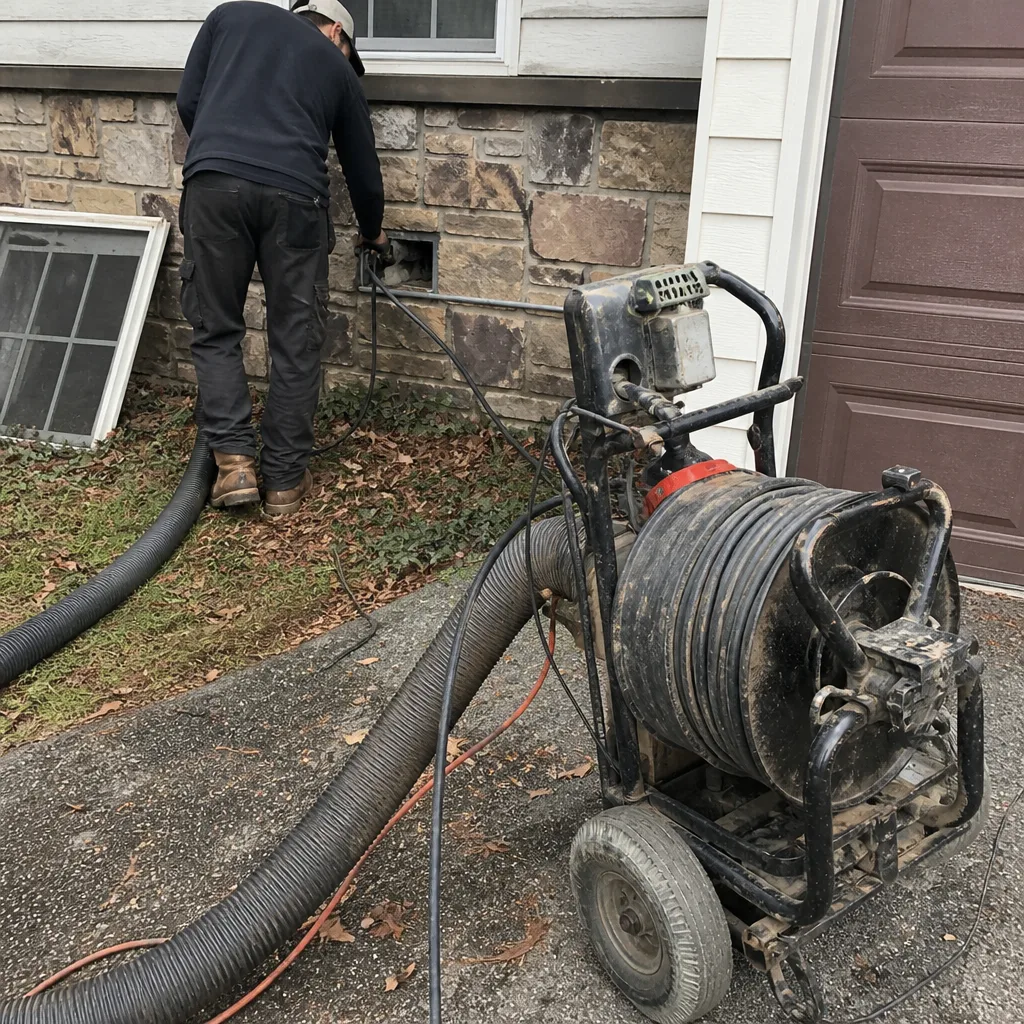 Before
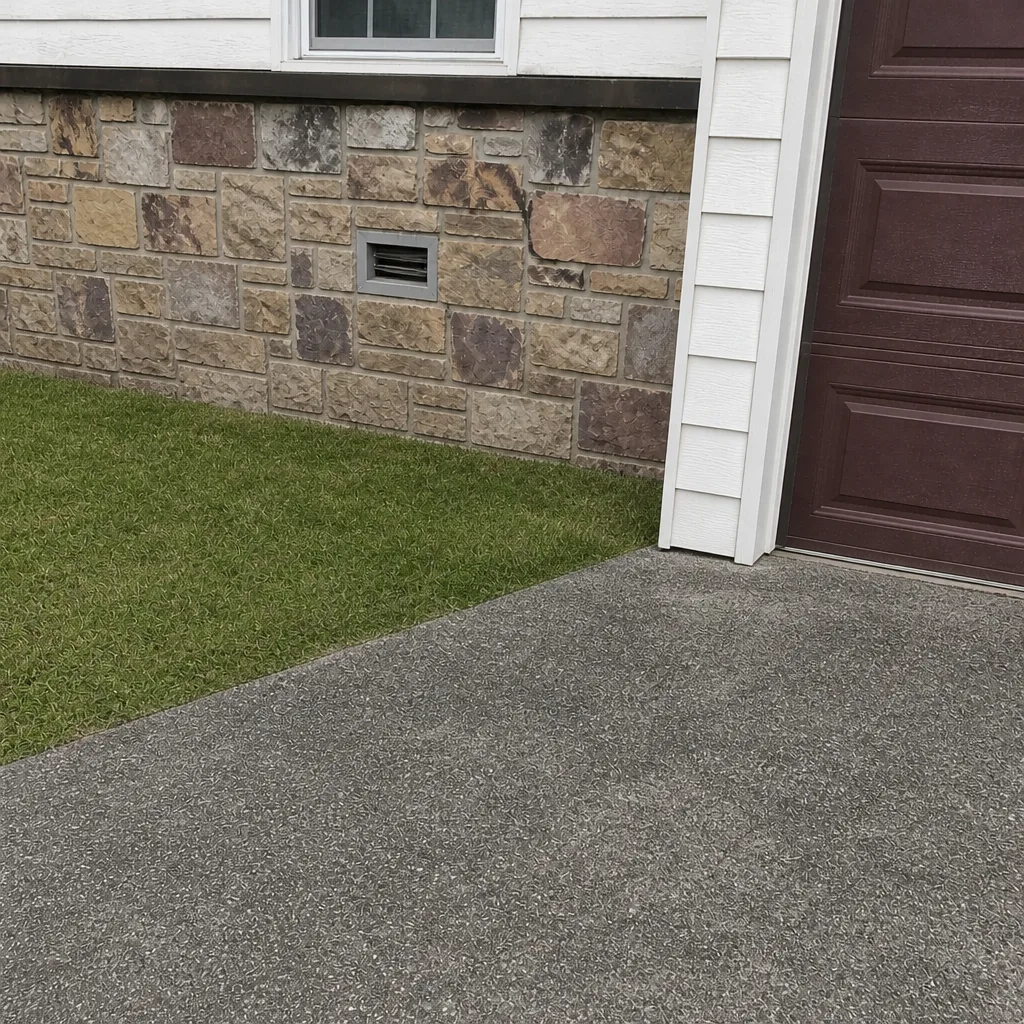 After
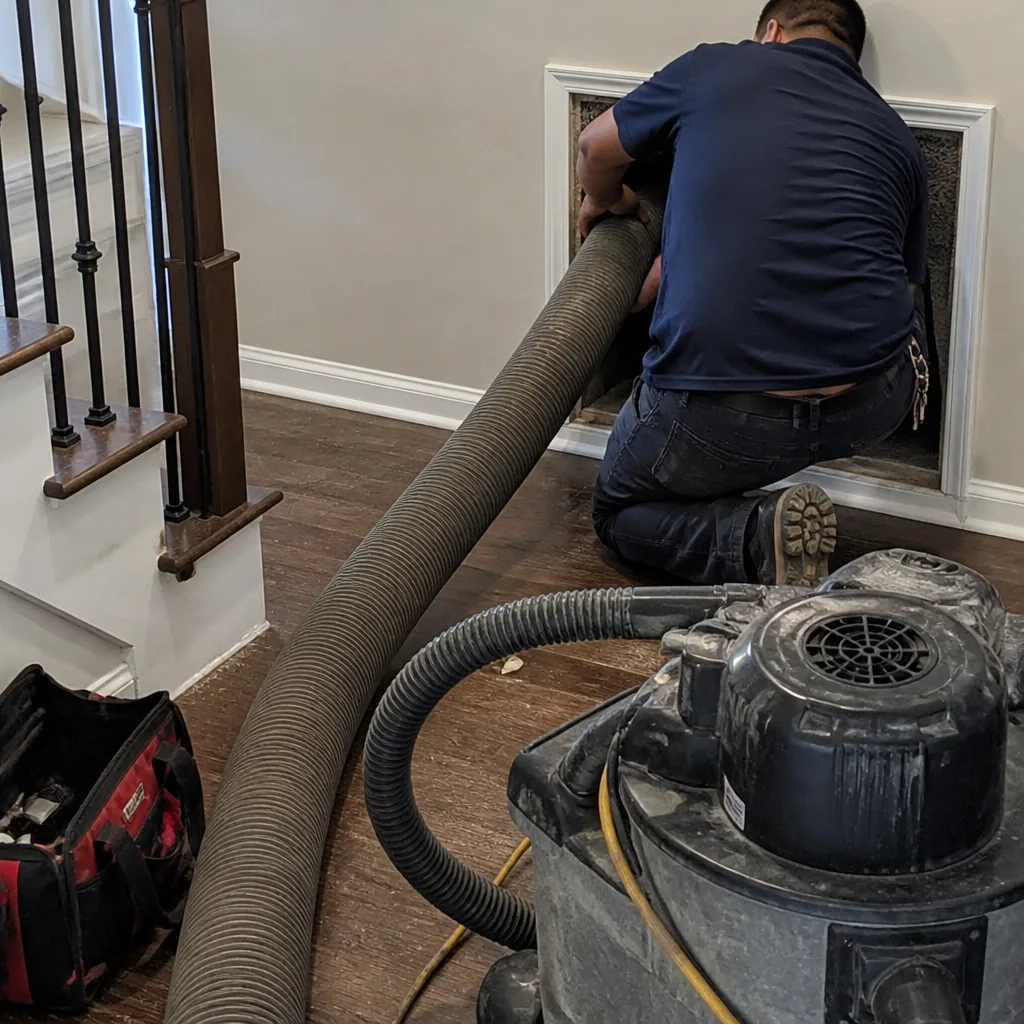 Before
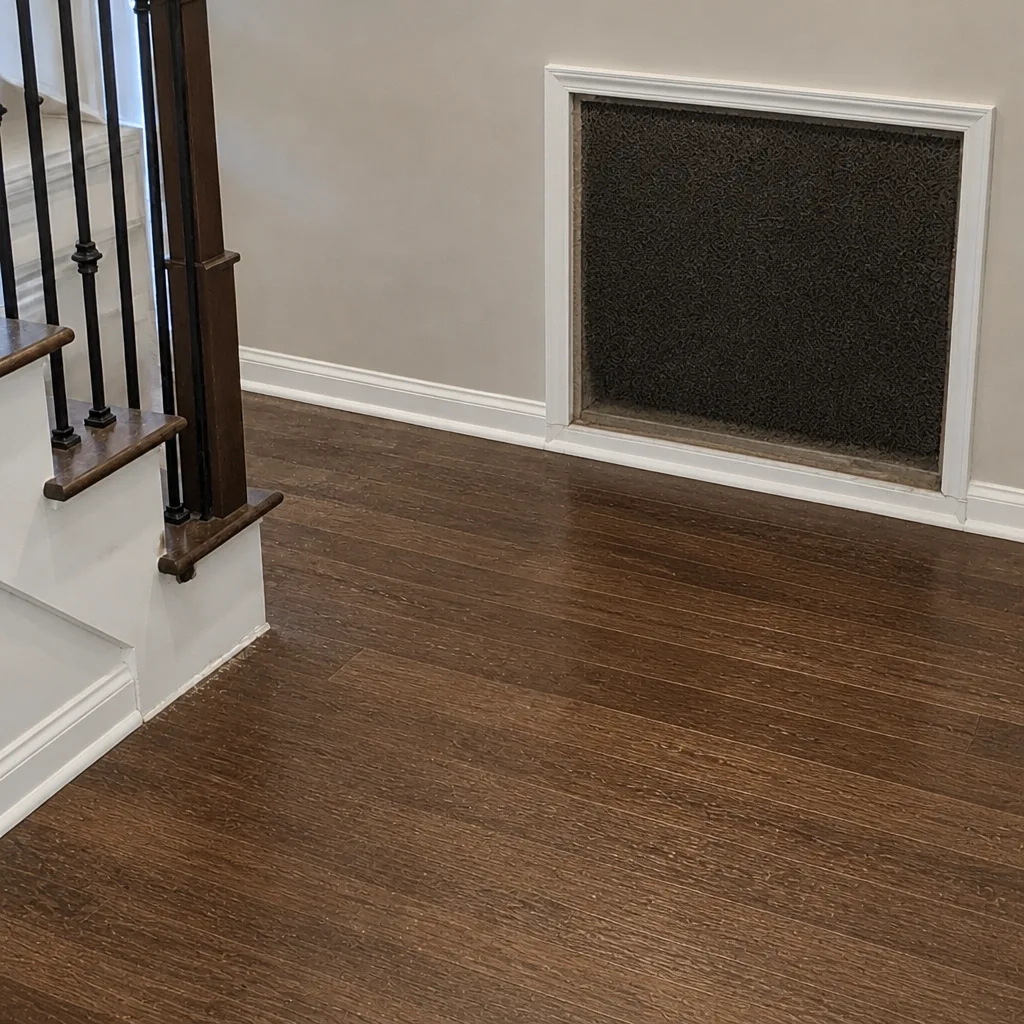 After
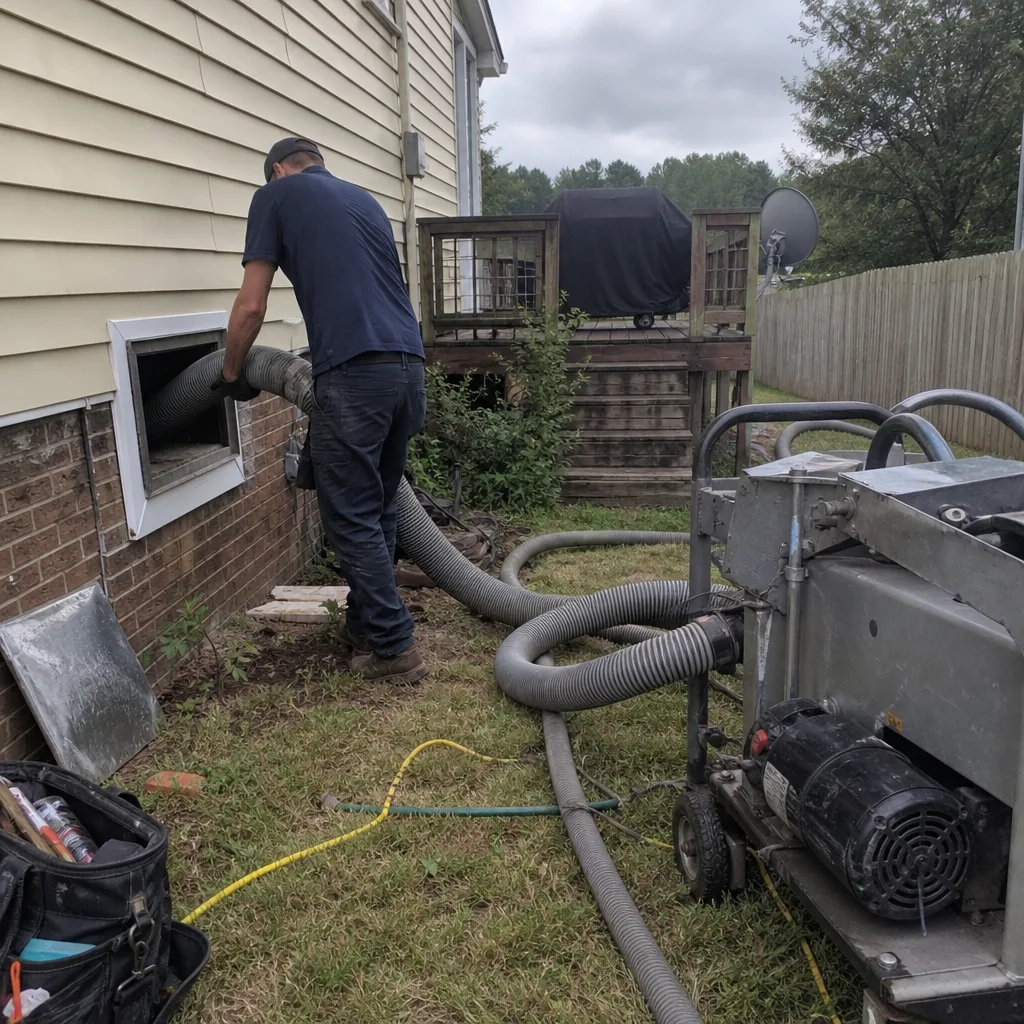 Before
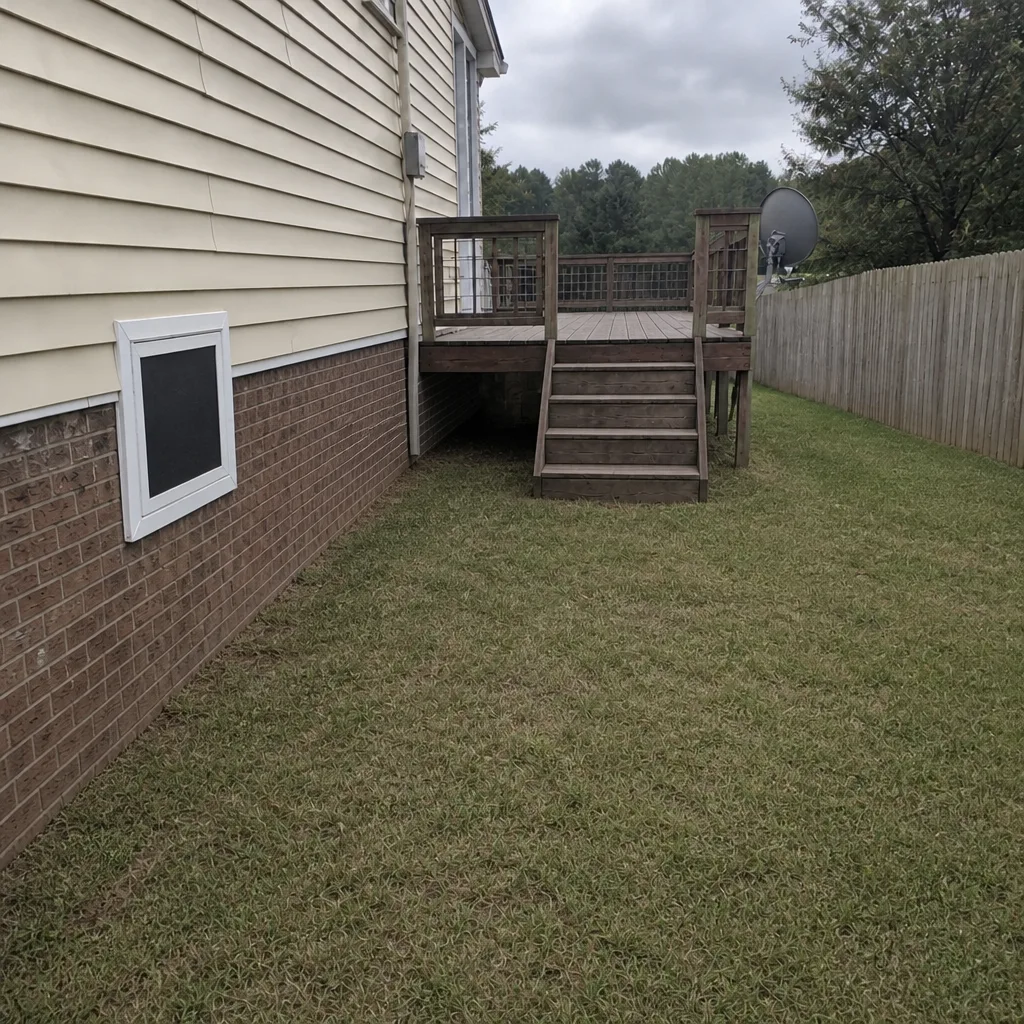 After
Frequently Asked Questions
The test is whether dust is coming out of the system or settling onto it. A light film on the grille face that wipes away clean is normal. Visible dust blowing out of the slots when the blower starts, a dark perimeter streak around the register, or an odor that comes and goes with the fan is a genuine warning sign. When any of those show up, call (844) 798-0184 for a free estimate.
A musty smell that appears only when the blower runs points most often to the evaporator coil or the condensate drain pan, which stay wet through Knoxville’s humid summers. Odor that’s present whether the system is running or not is more likely coming from duct liner degradation or pest intrusion. Call (844) 798-0184 – the diagnosis differs, and the estimate is free.
There’s no fixed calendar answer. In practice, most systems do fine with a professional inspection rather than a scheduled cleaning unless a triggering event has occurred – renovation, pest treatment, water intrusion, or one of the warning signs above. Homes on the older side of Knoxville’s housing stock, particularly those with flex duct installed before 2000 or original 1970s-80s metal runs, are more likely to reach the threshold where a cleaning plus sealing pass makes sense. Call (844) 798-0184 to talk through your specific home’s setup.
A low quote is often a scope that stops at the vents. The equipment and scope that actually remove contamination from the system – HEPA extraction, negative-air containment, and careful work at the coil and return side – costs more to run. Ask any company for one flat price per system, in writing, and for their equipment list and before-and-after photo policy. The price you see up front is the price that matters, not the teaser figure. Call (844) 798-0184 to get a scope-based quote.
Ask for before-and-after photos of your own ducts and system, not stock imagery, and expect the plan to be described in writing (access points, equipment used, scope). A professional-grade job can show you exactly what was done. Call (844) 798-0184 to schedule an estimate.
If a musty odor, black streaks around a register, or dust plume is still present after a cleaning, the likely cause is a scope that didn’t address the underlying problem – a failed boot-to-drywall seal, contamination at the coil, or a disconnected branch duct. Those are repair and sealing items, not cleaning items, and they need a company that does both. Call (844) 798-0184 for a re-assessment.
The Bottom Line
The value of mapping your warning signs to specific locations in the duct system is that it turns a vague “something’s wrong” into a specific service request. Odor tied to the blower points to the coil or drain pan. Constant odor points to liner degradation or pest intrusion. Black streaks at a register point to a sealing failure at the boot-to-drywall joint. Those three scenarios require three different responses, and a company that only cleans will miss at least two of them. If your ducts need professional attention in Knoxville, a proper assessment tells you what’s actually there, and one flat price per system in writing tells you what it costs. Call (844) 798-0184 for a free estimate. We answer 24/7, with fast dispatch from 7am to 7pm, Sunday through Friday. Closed Saturday.
We bring the right tools for the job – Rotobrush rotary brush systems, Nikro HEPA extraction, and Abatement Technologies negative-air containment – because the scope of the assessment is only as good as the equipment that executes it. Our technicians have up to 8 years of experience reading the cues in this guide, and we’re glad to walk you through what we find before we recommend anything.
Written by the team at Knoxville Air Duct Cleaning Experts.