
Air Duct Cleaning: Repair or Replace? How Knoxville Homeowners Decide
Most Knoxville homeowners who call us about ductwork have already been told they need a full replacement. Sometimes that’s true. Often it isn’t. The decision between cleaning, repairing, and replacing ductwork comes down to three measurable conditions: how contaminated the surfaces are, whether the duct structure still holds its shape and seals, and whether the liner or insulation has failed. Get those three answers and the path forward is usually obvious. If you’d rather have a professional assess it, call (844) 798-0184.
What’s the difference between cleaning, repairing, and replacing ductwork?
Cleaning removes contamination from duct surfaces that are still structurally sound. Repair and sealing fix gaps, disconnected joints, and crushed sections so the system stops leaking conditioned air into attics, crawlspaces, and wall cavities. Replacement is for ductwork where the liner has failed, the insulation is saturated or crumbling, or sections have collapsed. The three aren’t interchangeable, and treating a repairable system as a replacement candidate costs Knoxville homeowners thousands they didn’t need to spend.
A quick way to think about it: cleaning is a hygiene decision, sealing is an efficiency decision, and replacement is a structural decision. If the metal or flex is still doing its job as a duct, you clean and seal. If it isn’t, no amount of cleaning will help. We’ve inspected plenty of Knoxville attics where a duct looked fine from the outside but the inner liner had peeled away from the wire helix – a condition no vacuum will fix.
The three-condition framework for duct assessment
Every credible duct assessment in Knoxville comes down to these three conditions. Ask any technician you hire to document each one in writing before recommending a path.
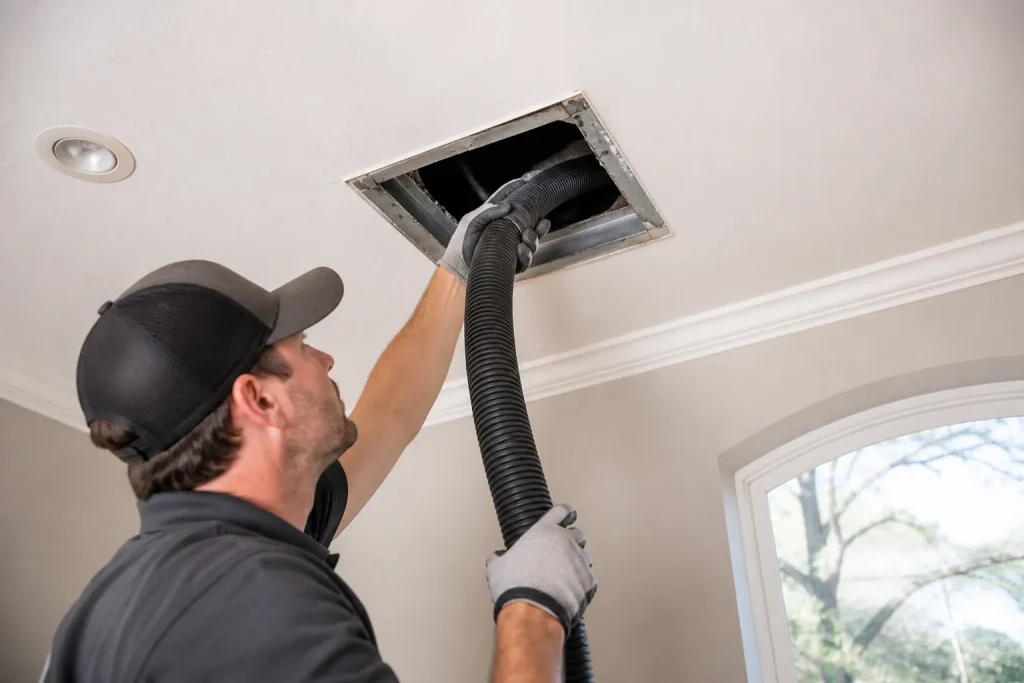
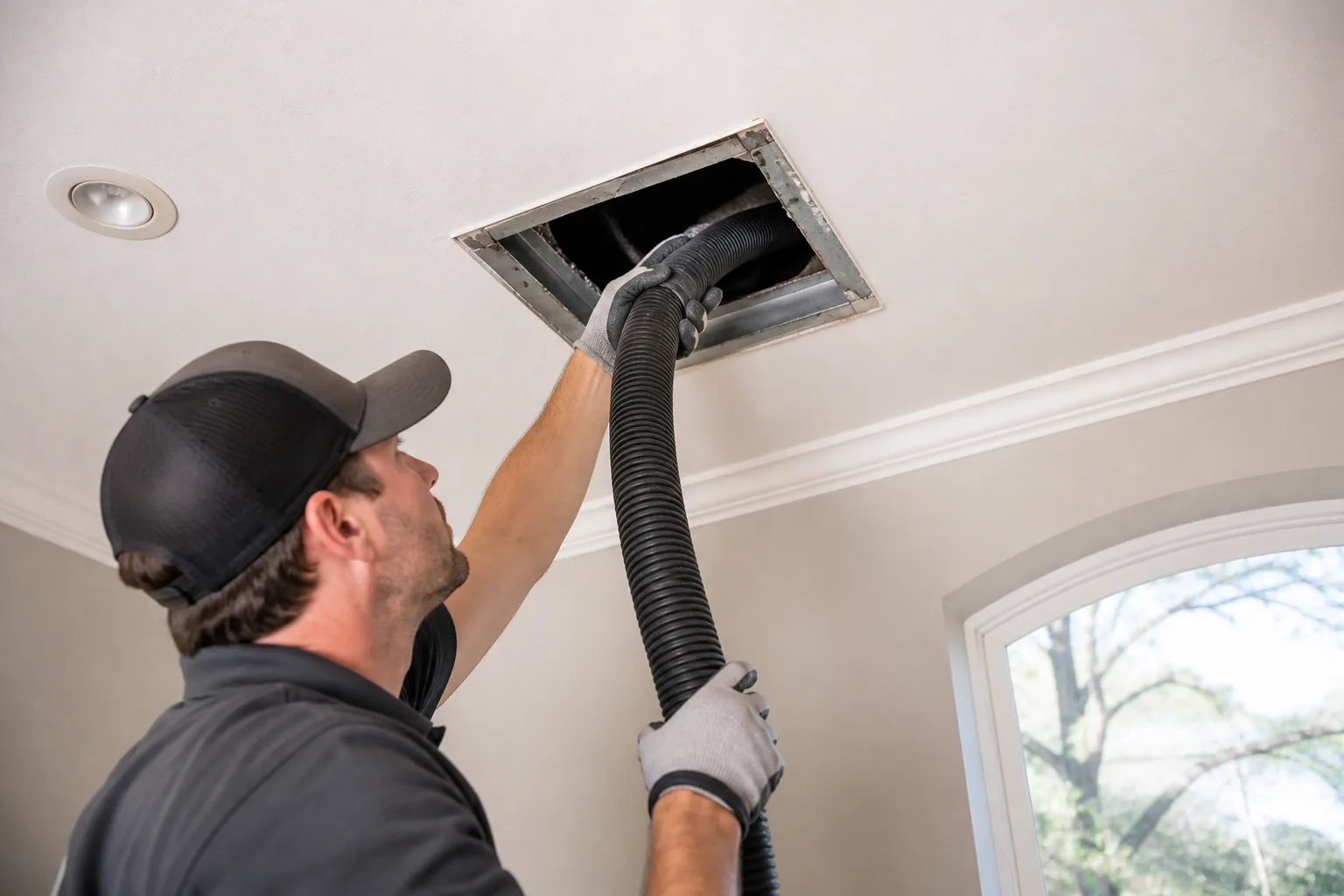
- Surface contamination (cleaning candidate): Dust, debris, microbial growth, and construction residue on duct walls. If the duct is intact, professional cleaning with a rotary brush system and HEPA extraction removes it without disturbing the structure.
- Structural integrity loss (repair and seal candidate): Disconnected joints, crushed flex, sagging runs, and leaks at seams. These are fixable with the right sealing method and don’t require replacement.
- Liner or insulation failure (replacement candidate): Fiberglass liner peeling away from the duct wall, saturated insulation, rodent breaches, or sections where internal material is breaking down. Cleaning a failed liner can accelerate the breakdown and push fibers into the airstream.
Notice what’s missing from that list: age alone. A 1998 flex run in good condition doesn’t need replacement. A five-year-old duct with a rodent problem might. Condition decides, not the calendar.
How do you read a duct leakage test result?
Duct leakage is measured in CFM25 – cubic feet per minute of air lost at 25 pascals of test pressure. Lower is better. For most Knoxville homes, a leakage rate in the low double digits as a percentage of system airflow is a repair candidate, not a replacement candidate. Flex duct with a 10 – 15% leakage rate usually responds well to sealing. Flex duct with collapsed inner liner sections or rodent breaches is a different conversation entirely.
What the number means in practical terms: every CFM of leakage is conditioned air you paid to cool or heat that never reached a living space. In an East Tennessee summer, that’s money going into the attic. In winter, it’s warm air escaping into a crawlspace you’ll never sit in. A leakage test tells you how much, and a visual inspection tells you where. Ask for both. A technician who quotes a replacement without showing you the leak locations and the test numbers is guessing.
One caveat worth stating plainly: leakage tests are a diagnostic tool, not a sales tool. If someone runs a test and immediately quotes a full replacement with no discussion of sealing options, ask what specifically makes the duct unrecoverable. You deserve a straight answer.
Duct sealing methods and when each one applies
The right sealing method depends on the leak. Matching method to leak type is where a lot of ductwork in Knoxville gets fixed cheaply and correctly – or badly.
- Mastic sealant: The standard for static joints, seam leaks, and connection points you can actually reach. Brush-applied, cures into a durable seal, and holds up to thermal cycling. This is the workhorse for accessible attic and crawlspace joints.
- Aeroseal: A pressurized whole-system approach that seals leaks from the inside by injecting aerosolized sealant into the ductwork. It reaches leaks you can’t see or touch – behind drywall, inside chases, at inaccessible joints. Useful when the leakage is widespread and access is limited.
- Foil tape: Fine for minor gaps and temporary fixes. It’s not a long-term solution for high-pressure leaks or joints that flex, and it has no business being the only thing holding a duct system together. If your quote lists foil tape as the primary fix, ask why.
We use professional-grade equipment on every sealing and cleaning job – Rotobrush rotary brush systems for surface work and Nikro HEPA extraction to keep debris out of your living space. The right tools for the job aren’t optional here; the wrong ones make a bad duct worse.
When does age and material mean replacement?
Material matters more than the years on it. Fiberglass-lined flex duct installed in East Tennessee homes before 2000 has usually degraded past the point where cleaning adds value. The liner delaminates, the insulation compresses, and the duct begins shedding fibers into the airstream. Cleaning a duct like that can accelerate the liner breakdown rather than fix it.
What to look for:
- Inner liner peeling away from the outer jacket or wire helix – visible when you look down a duct run with a light.
- Fiberglass particles visible in the airstream or settling on registers.
- Sagging or collapsed sections that restrict airflow.
- Moisture staining or saturation in the insulation – common in Knoxville’s humid summers.
If you find one or two of those conditions, sealing may still buy you time. If you find three or more, replacement is the honest call. A duct that’s actively shedding material isn’t a cleaning project – it’s a health-and-efficiency problem.
How do you get a condition-based written assessment?
Ask for the assessment in writing before anyone touches your system, and ask for these specific deliverables:
- The CFM25 leakage test result, before any work begins.
- Photographs of each condition found – contamination, leaks, liner failure.
- A written recommendation that names which of the three conditions triggered the recommendation.
- For repair candidates, the sealing method proposed and why.
- Before-and-after photos of the ductwork once work is done.
In our experience, a professional who’s actually assessed the system can show you what they found. If you can’t get photos and numbers, you’re being quoted on a guess. During cleaning we run Abatement Technologies negative-air containment to keep debris from spreading through the house – ask whether the contractor you’re considering does the same. If they don’t, that’s a red flag.
If your home also has a clogged dryer vent or your HVAC needs a full cleaning along with the ducts, that’s part of the same air-pathway service. A complete system assessment shouldn’t stop at the vents.
When to call a pro
Ductwork that’s visibly compromised – collapsed flex, active moisture, rodent damage, liner failure – isn’t a DIY project. Neither is sealing inaccessible joints or running a proper leakage test. And flexible duct in a hot Knoxville attic is not a comfortable place to spend an afternoon. Call a professional and get the assessment done right.
Related services in Knoxville: duct repair and sealing, air duct cleaning, and dryer vent cleaning.
The Bottom Line
Cleaning is for contaminated but structurally sound duct. Repair and sealing are for leaky but intact duct. Replacement is for duct whose liner or insulation has failed. That’s the whole decision, and anyone who tells you it’s more complicated than that is selling something. Ask for the leakage numbers, the photos, and a written recommendation tied to the three conditions. If those line up, you have your answer.
If you’re in Knoxville and need help, Knoxville Air Duct Cleaning Experts offers free estimates – call (844) 798-0184. We answer 24/7. Fast dispatch from 7am to 7pm, Sunday through Friday. The local pro is licensed and insured as their state requires, and you get one flat price agreed before work starts.
Frequently Asked Questions
Generally no. Cleaning a duct with a failing liner can accelerate the liner breakdown and push loose fiberglass into the airstream, which is worse than leaving it alone. If a technician finds liner failure during inspection, the honest recommendation is repair or replacement, not cleaning. Call (844) 798-0184 for an assessment – estimates are free.
It depends entirely on the scope – whole-home replacement runs far higher than sealing a handful of joints, and the exact number requires an on-site assessment. We don’t quote prices over the phone because the range is too wide to be honest. You get one flat price agreed before work starts, based on the written assessment. Call (844) 798-0184 – estimates are free.
Look for a low CFM25 number relative to your system’s total airflow, and for a technician who shows you where the leaks are. A repair candidate typically has leaks concentrated at accessible joints that respond to mastic sealing or Aeroseal. If the test shows widespread leakage with visible liner damage, replacement becomes the more sensible conversation. Call (844) 798-0184 to schedule an assessment.
Most homes need cleaning every few years, but repair is condition-based, not scheduled. Visible dust buildup, musty odors, allergies, or a recent renovation are the usual triggers for cleaning. Disconnected joints, crushed sections, and leaks are the triggers for repair and sealing. If you’re unsure which you’re dealing with, an inspection answers it. We work with Honeywell and Aprilaire air quality systems to round out the fix – call (844) 798-0184.
Written by the team at Knoxville Air Duct Cleaning Experts.
Need Air Duct Cleaning Help?
Call Knoxville Air Duct Cleaning Experts - the local pro we connect you with is licensed and insured, here with fast help in Knoxville.
(844) 798-0184