
Emergency Air Duct Cleaning Near Me: What Knoxville Homeowners Should Do First
Shut the system down, don’t run the fan to “air things out,” and cover the return openings before anything else. If the contamination involves smoke, sewage, floodwater, or a rodent die-off, running the blower spreads it through every room in the house in minutes. Then call (844) 798-0184 and tell us exactly what happened. We answer 24/7. Fast dispatch from 7am to 7pm, Sunday through Friday.
The first instinct after a sewage backup near the air handler is to crank the fan and clear the smell. That single move is how a localized contamination event becomes a whole-house remediation job. We’ve walked into plenty of Knoxville homes where the ducts were fine and the air handler was fine, but every register in the house had been seeded with whatever was in that one return.
Key Takeaways
- Turn the system to OFF, not fan-only, when contamination is present. Moving air moves contaminants.
- Cover return grilles with filter media and tape to slow spread without sealing airflow dead.
- Photograph everything with timestamps before anyone touches it. Insurance claims turn on documentation.
- Only three situations are true duct emergencies: post-fire soot, rodent die-off, and sewage or floodwater contact.
- Ask what extraction equipment a company brings. Abatement-grade HEPA is not the same as a shop vac and a brush.
What Actually Counts as an Air Duct Emergency in Knoxville?
Three scenarios qualify: post-fire soot contamination, a rodent infestation die-off inside ductwork, and sewage or floodwater contact with the duct system. Everything else – dust, musty odors, allergy flare-ups, a renovation that left debris in the returns – is a scheduling problem, not an emergency. The distinction matters because it changes your first move.
Post-fire soot is the most misunderstood. Smoke residue is acidic and it settles on every interior surface of the duct system, including the plenum and the evaporator coil housing. A Knoxville house fire that gets knocked down fast still leaves the whole air pathway contaminated if the system ran during or after the burn. Soot on a coil is not a cleaning problem you can postpone.
Rodent die-off is the one that gets discovered by smell. A squirrel or mouse gets into the return chase, doesn’t get out, and the decomposition odor travels to every room. The instinct is to spray something. That masks it for a day. The carcass, the droppings, and the contaminated insulation around it all have to come out, and the surrounding duct surface has to be treated.
Sewage and floodwater are the clearest emergency. Category 3 water – the technical term for water that carries pathogens – contacting ductwork means the affected sections are contaminated, not just dirty. Knoxville’s older housing stock has plenty of ductwork in crawlspaces and low basements where a backed-up drain or a failed sump can reach it.
What Should You Do in the First Hour?
Turn the system off at the thermostat first, then cover the return openings. Don’t set it to fan-only and don’t run the AC “to see if it clears up.” Getting the air moving is the opposite of what you want when the contamination source is in the air pathway.
- Set the thermostat to OFF. Not cool, not heat, not fan. Off. If you can, kill power to the air handler at the breaker.
- Photograph the source area. Where the water came in, where the smoke settled, where you saw the rodent activity. Get wide shots and close shots.
- Cover return grilles with filter media. A piece of furnace filter material taped over the return face slows the spread of loose debris and odor. Leave a gap – don’t seal it airtight. You want reduced flow, not a pressurized duct system.
- Keep people and pets out of the affected rooms. If sewage is involved, treat it as a biohazard area until a professional assesses it.
- Don’t spray air freshener or disinfectant into the ducts. It adds a chemical to the contamination and gives the technician one more thing to remove.
The filter-and-tape step is a holding measure, not a fix. It buys you time and limits how far the problem travels. It does not clean anything.
If you’d rather not handle any of this yourself, call (844) 798-0184 and we’ll walk you through shutting it down while we get a technician scheduled.
What Documentation Should You Gather Before the Technician Arrives?
Photos, timestamps, and your insurance policy number. That’s the short answer. Remediation claims get paid or denied on documentation, and the strongest evidence is always what the homeowner captured in the first hour, before anything was moved or cleaned.
Here’s what adjusters and remediation reviewers actually want to see:
- Timestamps on every photo. Most phones embed this automatically. Don’t delete the metadata.
- The source, wide and close. A photo of the water line on the duct insulation plus a photo of the room it happened in.
- The path of spread. Any register, grille, or ceiling stain that tells the story of how far it traveled.
- Your policy number and the claim reference if one’s been opened. Have it ready so the written scope matches what the insurer expects.
- A short written timeline. When it happened, when you shut the system off, when you called. Ten lines is plenty.
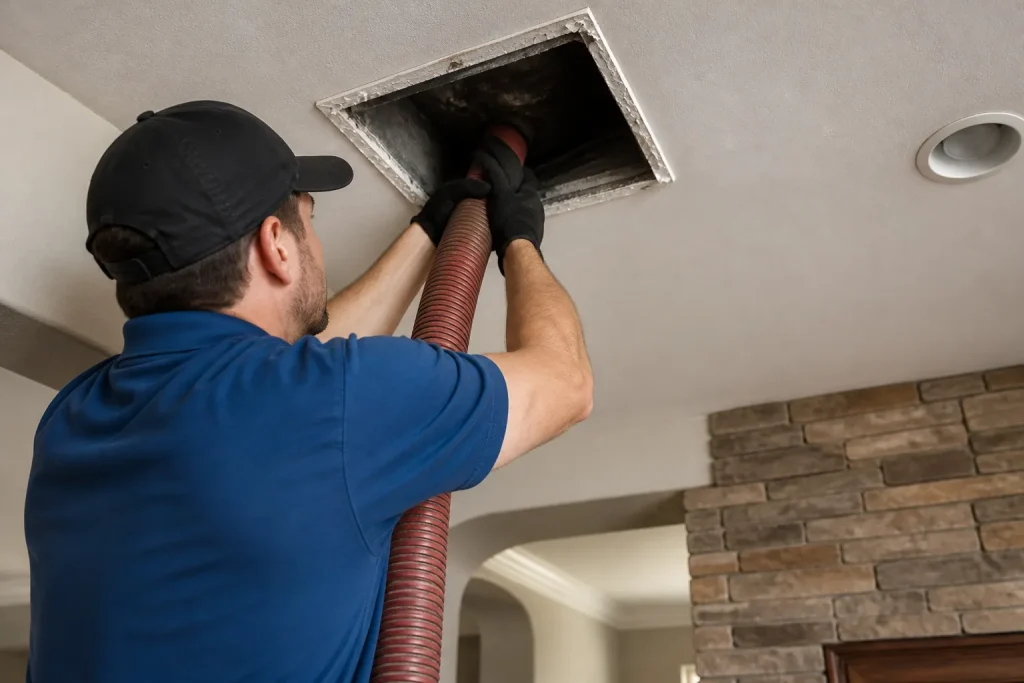
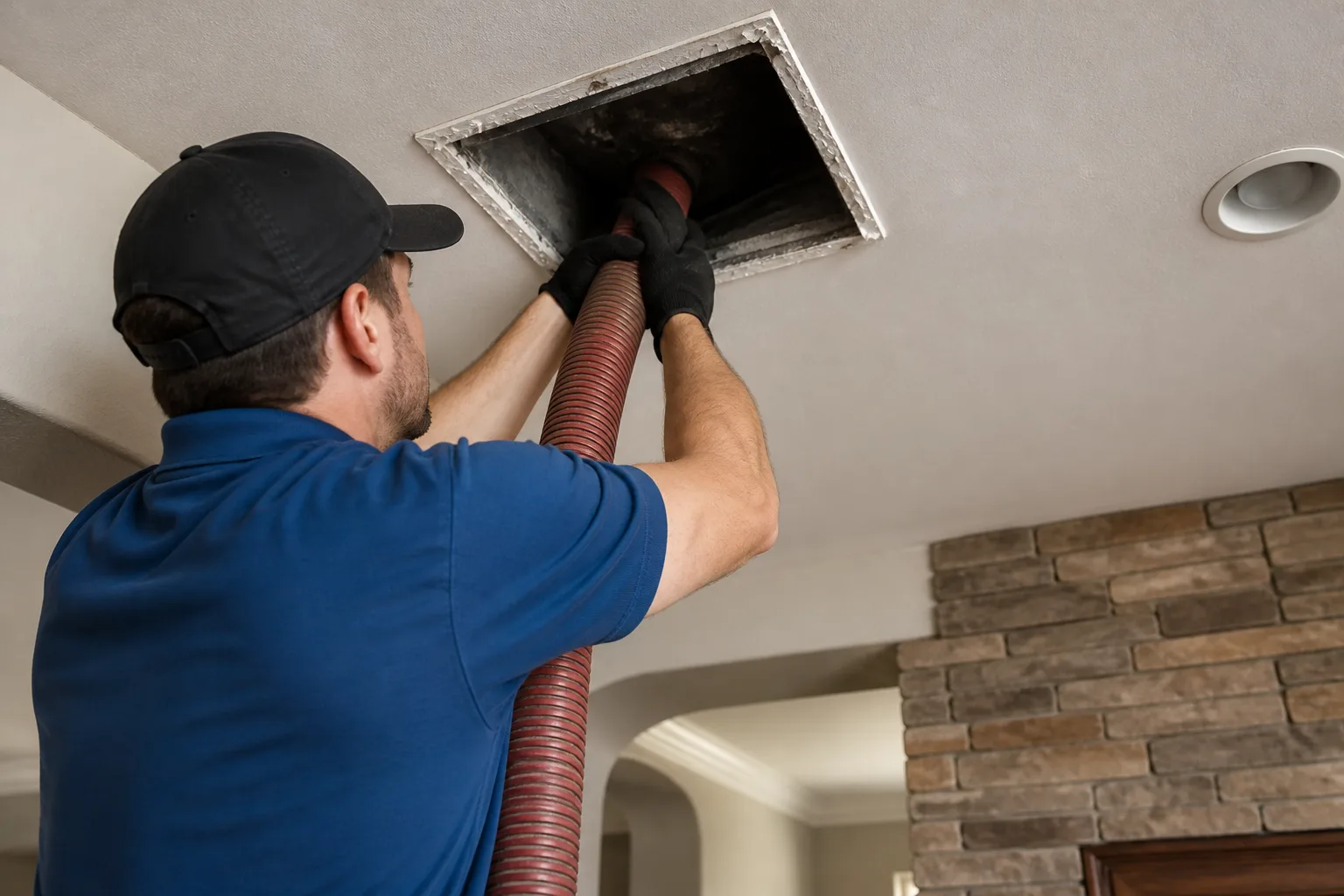
This documentation habit is also why we photograph the inside of every duct we open before and after cleaning. The homeowner gets before-and-after images of their own system, not stock photos of somebody else’s. On a remediation job, that record matters beyond reassurance – it’s the visual proof that the contamination was addressed.
How Do You Know a Company Has the Right Equipment for an Emergency?
Ask what extraction equipment they bring, and listen for specific machines. Real abatement work uses negative-air containment and HEPA extraction rated for the job, not a portable vacuum with a brush attachment.
Here’s the difference that matters. A standard residential cleaning setup – a rotary brush vacuum and a hose – is fine for routine maintenance on a healthy system. It is not sufficient for a contaminated one. On a genuine emergency, the technician should be setting up negative-air containment with a machine like the Abatement Technologies units used in commercial and remediation work, so the contaminated space is held at negative pressure while the ducts are opened. That prevents cross-contamination into the rest of the house. Without it, opening a contaminated duct can push material into living space.
Our work uses Abatement Technologies negative-air machines alongside Rotobrush rotary brush vacuums and Nikro HEPA extraction units. Those are the same equipment classes used on commercial HVAC and remediation projects, and they’re the reason we can handle a contaminated system instead of just a dusty one.
Two more questions worth asking on an emergency call:
- Can the company handle repair and sealing, or just cleaning? Contaminated or water-damaged duct sections often need to be sealed or replaced, not just scrubbed.
- Do they sanitize as a standard step or an upsell? On a sewage or rodent job, sanitation isn’t optional. We treat it as part of the job, and we work with Guardsman products for post-cleaning protection.
When Should You Call a Pro Instead of Waiting?
Call now if the contamination involves sewage, floodwater, fire residue, or a confirmed rodent carcass in the ductwork. Those three categories don’t improve with time. Sewage and floodwater contamination grows; soot residue continues to settle and corrode; a decomposition problem keeps producing odor until the source is physically removed.
Two other situations are worth a call even though they’re not emergencies: visible mold growth around a register or on the duct exterior, and a musty odor that returns every time the system runs. Both point to a moisture problem upstream, and cleaning alone won’t fix a leak that keeps feeding it. We handle duct repair and sealing as part of the same visit for exactly that reason – no handoff, no second contractor.
On our Knoxville Air Duct Cleaning Experts page you can see the full air-pathway scope. If you’re deciding between a maintenance cleaning and an emergency response, the short version is that routine air duct cleaning is a scheduled job and contamination response is a different kind of visit.
Related services in Knoxville: if the contamination event also involved a dryer or a compromised HVAC system, dryer vent cleaning and HVAC cleaning address those components in one visit. Our technicians have up to 8 years of experience and work only on air quality and duct systems – we’re not a general HVAC repair company.
What Happens When You Call?
We ask what happened, how long ago, and whether the system has been run since. Then we book the visit. We answer 24/7. A call outside dispatch hours is booked into the next opening, Sunday through Friday, 7am to 7pm. We’re closed on Saturday.
Before we hang up, you’ll get clear instructions for shutting down the system and covering the returns if you haven’t already. The price is set per job by a written estimate, agreed before any work starts. No per-vent pricing, no surprise line items once equipment is on site.
One piece of honesty: “emergency” gets used loosely in this trade. Not every duct company advertising emergency service has abatement-grade equipment. Ask. If the answer is vague – “we have commercial stuff” – it’s a fair reason to call someone else.
The Bottom Line
Shut the system off, don’t run the fan, cover the returns with filter media, and photograph everything with timestamps before anyone touches it. Those four steps protect your home and your claim. Then get a technician who brings the right tools for a contaminated system, not a routine cleaning kit. That means Abatement Technologies containment and HEPA extraction, plus the capability to repair and seal ductwork if it’s compromised. We clean it, repair it, seal it, and sanitize it – one air pathway, one call.
If you’re in Knoxville and need help, Knoxville Air Duct Cleaning Experts offers free estimates – call (844) 798-0184. We answer 24/7. Fast dispatch from 7am to 7pm, Sunday through Friday.
Frequently Asked Questions
It’s urgent response to ductwork contaminated by fire soot, sewage, floodwater, or a rodent die-off. Routine dust, odors, or allergy concerns don’t qualify; they’re scheduled work. If the contamination involves pathogens or combustion residue, treat it as an emergency. Call (844) 798-0184 for an exact quote – estimates are free.
No. Running the fan or AC moves the contaminant through every branch of the duct system and into every room. Shut the system off at the thermostat, kill breaker power to the air handler if you can, and cover the return grilles with furnace filter material taped on with a small gap. Call (844) 798-0184 and we’ll confirm you’ve shut it down correctly.
It depends on the size of the system and how contaminated it is, so we don’t quote a number over the phone or price per vent – that’s how bait-and-switch jobs start. You get one flat price per system, agreed before work begins, and before-and-after photos of your own ducts when it’s done. Call (844) 798-0184 for an exact quote – estimates are free.
You should see the inside of your ducts before and after cleaning in photos taken at your home, not stock images. On a remediation job, you should also see the negative-air containment set up and the HEPA extraction units in place – that’s the equipment that separates abatement-grade work from a spot vacuum. Call (844) 798-0184 if you’re unsure what your last company actually used.
Written by the team at Knoxville Air Duct Cleaning Experts.
Need Air Duct Cleaning Help?
Call Knoxville Air Duct Cleaning Experts - the local pro we connect you with is licensed and insured, here with fast help in Knoxville.
(844) 798-0184