
Last updated November 25, 2026
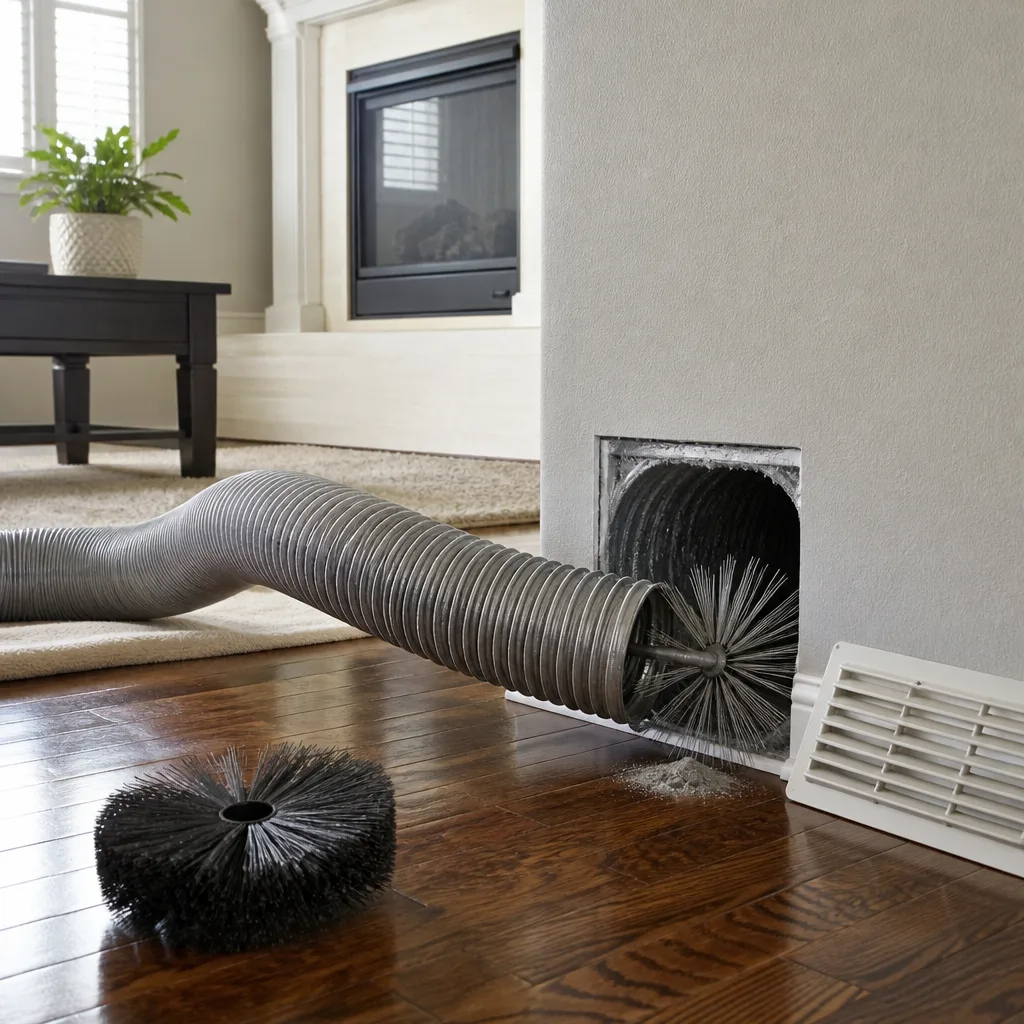 Whole-home duct cleaning
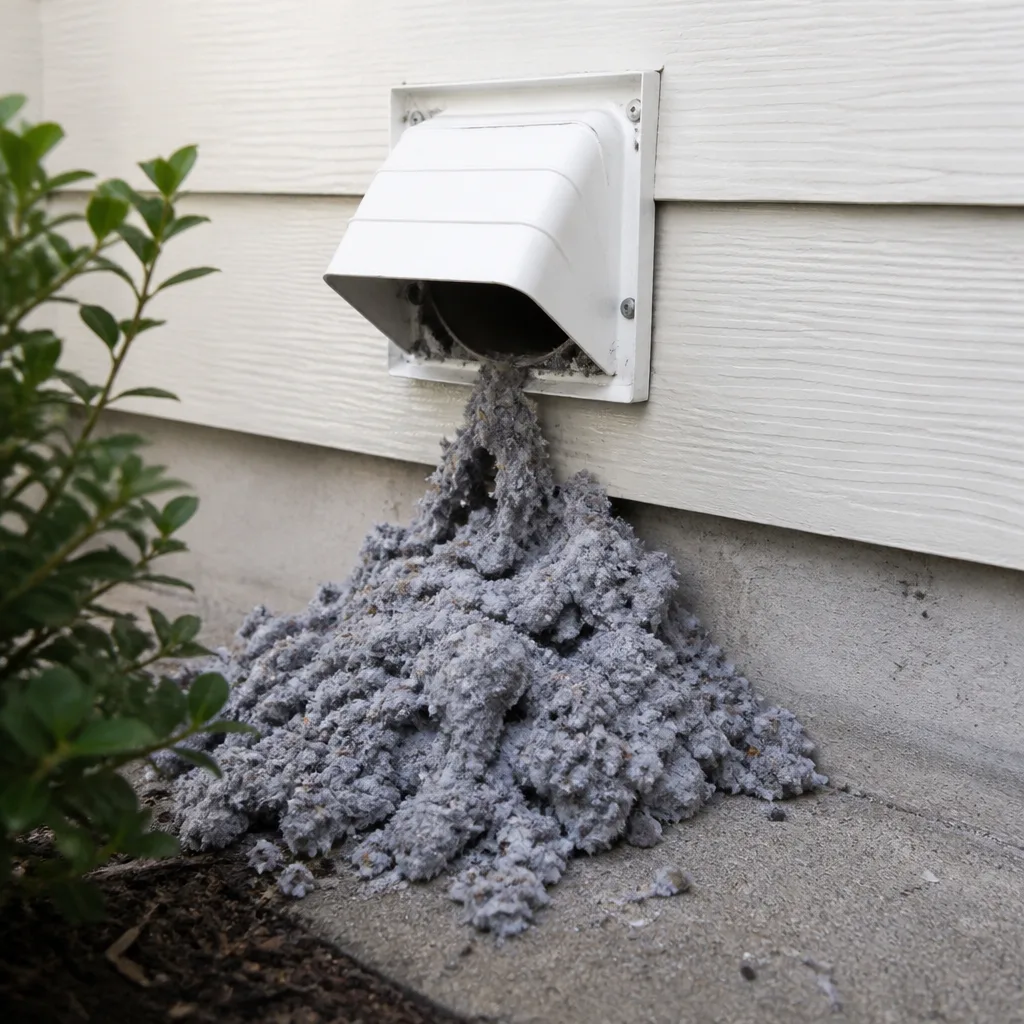 Dryer vent cleaning
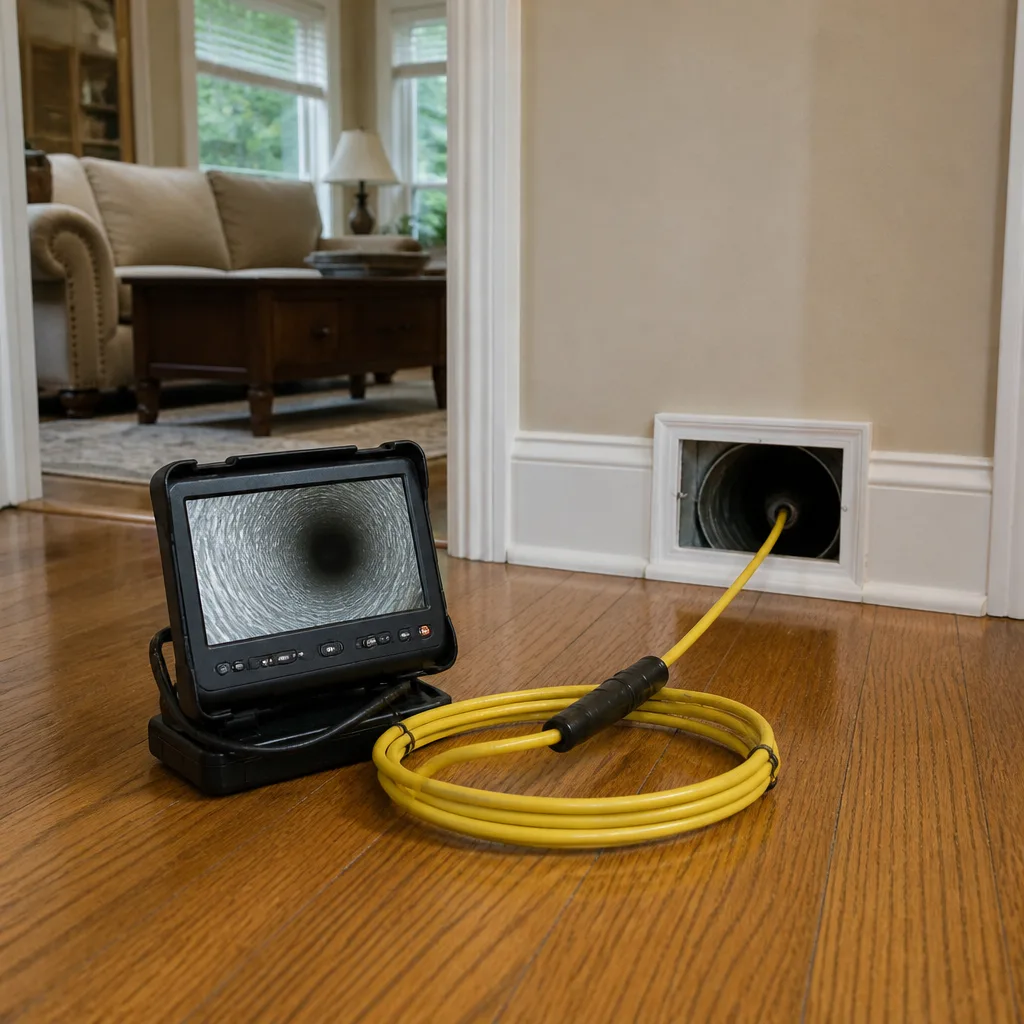 Camera inspection
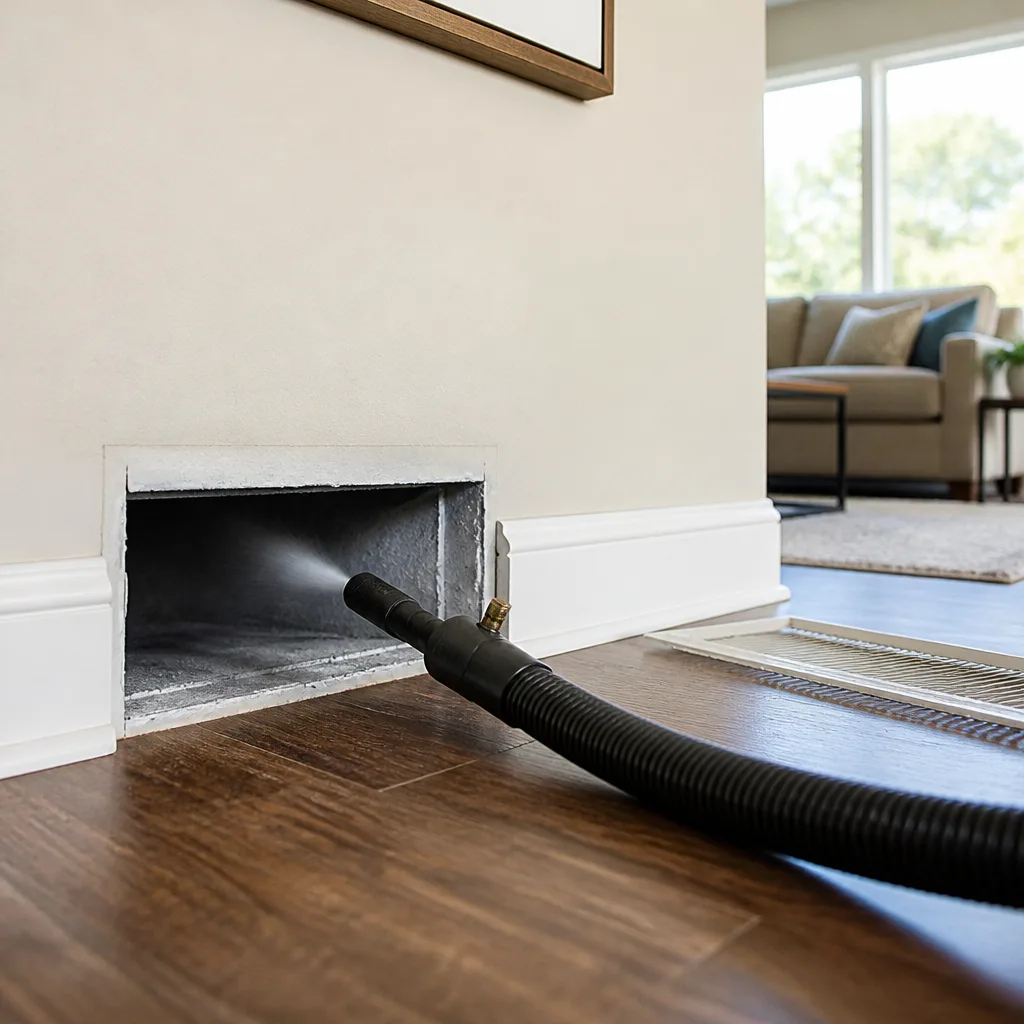 Sanitizing & deodorizing
Whole-system duct and dryer vent check with before-and-after photos - you see exactly what came out of your vents
That "$99 whole-house special" is a bait ad - the real number appears once they are in your hallway, or the "clean" is a shop-vac at the register. We photograph the inside of your ducts before and after instead.
The Complete Guide to Air Duct Cleaning in Knoxville
Most people picture duct cleaning as a truck, a hose, and a guy vacuuming the vents. That picture is the reason so many Knoxville homes still have dirty ducts after a “cleaning.” The vents are the exit, not the source. The heaviest contamination sits deeper in the system: the return air box, the plenum above the air handler, the coil cabinet where moisture collects, the trunks and branch runs that feed every room. A job that stops at the register boot leaves the worst of it in place and pushes it back into your air the moment the blower starts.
This guide maps the whole air pathway, component by component, and explains what each part actually needs. You’ll learn what Knoxville’s humidity and clay soil do to ductwork, how a complete cleaning differs from a vent pass, and what proof to ask for before you pay. If you’ve ever wondered what a real professional-grade process looks like, we’ll walk you through it the same way we talk homeowners through it every day.
Quick Answer
Air duct cleaning in Knoxville is a full-system process that removes accumulated dust, debris, and biological growth from every part of the air pathway: the air handler cabinet, supply and return plenums, trunk lines, branch runs, boots, and registers. Done correctly with professional-grade extraction equipment, it takes several hours, usually runs in the several-hundred-dollar range for a typical single-family home depending on system size and condition, and ends with proof, typically before-and-after camera footage and a static pressure check, that the whole pathway was actually cleaned. A quick vacuum of the visible vents is not air duct cleaning and does not deliver the same result.
Styles & brands we work with
- Whole-home duct cleaning
- Dryer vent cleaning
- Camera inspection
- Sanitizing & deodorizing
Table of Contents
- What the Air Pathway Actually Includes
- Why Knoxville Duct Contamination Looks Different
- Contact Vacuum vs. Blow-and-Collect: Which Method Fits
- What a Complete Job Looks Like, Step by Step
- When Sanitizing Is Worth It and When It Isn’t
- How to Verify the Job Was Done Completely
- What Air Duct Cleaning Costs in Knoxville
- Duct Repair and Sealing: The Part Most Cleaners Skip
- Common Mistakes to Avoid
What the Air Pathway Actually Includes
Ductwork is not one long tube. It’s a network with a starting point, a network of distribution, and dozens of exit points, and each section behaves differently because each handles air at a different speed, temperature, and pressure. That’s why a single vacuum nozzle can’t clean a whole system. Here’s what actually needs attention in a typical Knoxville home:
- Air handler cabinet and blower compartment. The blower pulls air through the return side and pushes it into the supply side. Dust that slips past the filter accumulates on the blower wheel and cabinet walls. A dirty blower wheel loses efficiency and throws dust back into the airstream.
- Return air box and return plenum. The return is the suction side, so it collects the heaviest load. In Knoxville, that often means a genuine layer of red clay dust tracked in from yards and driveways, packed against the bottom of the return chase.
- Supply plenum. The large sheet-metal box sitting directly above or beside the air handler. Turbulence here drops fine dust out of the airstream, and it settles into corners that a vacuum brush reaches only with the right tool.
- Trunk lines. The main distribution ducts. They carry high-volume air and develop a thin, even coating of fine particles that looks like paint but isn’t.
- Branch runs. The smaller ducts running to individual rooms. These carry less pressure and accumulate more debris per square foot than the trunks.
- Boots and registers. The transition where rigid duct meets the wall or floor. Boots are where debris falls back into the room and what most people assume is the “duct,” even though it’s the final few inches of a much longer run.
When we talk about a Knoxville air duct cleaning expert, this whole list is what we mean. If a quote only covers registers and doesn’t mention the plenum or the air handler, the job is not a complete clean, no matter what the invoice says.
Why Knoxville Duct Contamination Looks Different
Duct contamination isn’t the same everywhere. Missouri River dust isn’t the same as Tennessee dust, and Arizona’s dry air doesn’t create the same conditions that Knoxville’s climate does. Two local factors shape what we find inside most Knoxville systems:
Humidity and coil surfaces
Knoxville’s summers sit in a long stretch of warm, humid air, and the evaporator coil becomes a damp surface for weeks at a time. Moisture plus dust plus a cool metal surface equals biofilm, a thin organic film that forms on the coil and the surfaces around it. It smells like a musty basement even when nothing else does. Biofilm is not something a dry vacuum lifts off; it needs mechanical agitation and, depending on the depth, targeted treatment. That’s a separate issue from ordinary dust, and it’s one of the most common reasons people in Knoxville call about a smell rather than a dust problem.
Red-clay dust in return lines
Knoxville sits on clay-heavy soil, and clay behaves differently from sandy dust. It’s fine, sticky when damp, and it compacts. It rides in on shoes, gets picked up by the return, and then lays down in the return ducting instead of blowing through to the filter. Homes near active improvement or new construction see this at higher concentrations, and it’s one of the reasons renovation cleanup is a separate job category in this region. A dryer-duct side note here too: because the clay is airborne, the lint screen and dryer vent capture a mix of lint and mineral dust that clogs more aggressively than it would in a sandier climate. If your dryer runs long or feels unusually hot, that’s why regular dryer vent cleaning matters more here than the sales pitch suggests.
If your house was built before the 1990s, there’s one more factor worth knowing. Older Knoxville housing stock often uses rigid sheet-metal ducts with fewer seals than new construction, so leaks pull dirty attic or crawlspace air into the system. That means cleaning without sealing doesn’t solve the source. We’ll get to that in the repair section.
Contact Vacuum vs. Blow-and-Collect: Which Method Fits
Two broad methods dominate air duct cleaning: contact vacuum (a brush or air whip combined with a HEPA vacuum operating at the same time) and blow-and-collect (compressed air loosens debris and a collection system at the far end captures it). Neither is universally “better.” The right method depends on what the ducts are made of, how they’re built, and what condition they’re in. Here’s how we evaluate it on a typical Knoxville job:
- Look at the duct material. Sheet-metal trunks and branch runs clean well with either method. Flexible duct, which shows up frequently in additions and retrofits, needs gentler contact tools so the liner isn’t damaged.
- Check the seal quality. Loose, unsealed ductwork blows dust into the attic or crawlspace when pressurized, which is unhealthy for the space and defeats the purpose. Sealed systems handle pressure-based methods cleanly.
- Weigh the debris load. Heavy clay dust in the return chase responds better to contact extraction first, with a targeted collection pass after. Light dust in a newer system may only need a single well-run collection pass.
- Consider the home’s occupants. Homes with allergy-sensitive occupants benefit from Abatement Technologies negative-air containment during the job, which keeps dust from migrating into living spaces while the work is happening.
Most jobs we see combine methods: contact extraction on the heavily loaded return and boots, pressure-based collection on the trunks and branches. The point is that a professional should be able to explain which method fits your system and why, in plain language, before they start. If the answer is “we use the same method for everything,” that’s a signal the crew isn’t evaluating the job.
The equipment itself is part of the answer. Our technicians work with Rotobrush rotary brush systems and Nikro HEPA extraction units, the same class of equipment used in commercial HVAC and remediation work, because that’s the tier of extraction a full air pathway requires. A shop vacuum handles a vent. It cannot handle a plenum.
What a Complete Job Looks Like, Step by Step
A complete job is not a single action. It’s a sequence of steps, and each one exists because skipping it leaves dirt behind. Here’s what a full-system cleaning typically involves:
- Inspection and system mapping. Identify the air handler, supply plenum, return plenum, trunks, branches, and boots. Note the filter location and check for obvious leaks or disconnected runs.
- Containment setup. Set up negative-air containment around the work area, so loosened debris is captured rather than drifting into living spaces.
- Register and boot coverage. Remove registers and cover boots so that extraction happens where it should, not through the wall.
- Return-side cleaning first. The return is the heaviest loaded side. Cleaning it first keeps downstream runs from being recontaminated during the job.
- Supply plenum and air handler. Wipe or contact-clean the interior of the plenum and access the blower compartment to remove settled dust.
- Trunk and branch extraction. Run the extraction method chosen for your system (contact, collection, or a combination) through each section in order.
- Boot and register cleaning. Finish at the visible end, so anyone who checks the vents sees a clean result.
- Sealing of any leaks found. If the inspection revealed leaks or loose joints, these are sealed as part of the job, not deferred.
- Verification. Camera footage and a static pressure reading, walked through with you before the crew leaves.
When you book air duct cleaning through us, this is the sequence the local pro follows. If any step is skipped on a quote, ask why. A complete job takes time because the sequence is not optional, and any company that promises an hour-long visit is describing a vent pass, not a system clean.
When Sanitizing Is Worth It and When It Isn’t
Sanitizing is not automatically part of air duct cleaning, and treating it as a standard upsell is one reason homeowners get skeptical. A standard clean removes the material; sanitizing addresses what remains biologically. It’s a legitimate service with legitimate triggers, and knowing the triggers saves you money on jobs where it isn’t needed.
Scenarios that actually warrant treatment:
- A persistent musty or mold-like odor, usually traced to the coil surface or plenum and consistent with biofilm growth. Cleaning alone may not eliminate the smell.
- Rodent intrusion. Droppings and urine in a duct are a contamination category that a clean doesn’t fully resolve; a targeted disinfectant application is appropriate after removal.
- Post-flood or water damage. Moisture intrusion can cultivate growth in the duct system. Cleaning plus treatment plus verification is the standard approach in those cases.
- Recent renovation with heavy drywall dust. Fine gypsum dust infiltrates the system and settles in branch runs. A clean removes the dust, and post-clean protection is sometimes a reasonable step if the homeowner wants it.
When sanitizing is applied, the product matters. Guardsman-certified products are what we work with, and they’re applied after cleaning, not in place of it. Sanitizing a dirty duct is like spraying a disinfectant on a floor before sweeping it. Order matters. If someone quotes you a “sanitize-only” package on a system with a heavy debris load, ask them to clean first.
How to Verify the Job Was Done Completely
The core hesitation with duct cleaning is simple and fair: how do you know it was actually done? A vent that looks clean at the end proves nothing about the run behind it. Two verification steps separate a real job from a drive-by:
- Before-and-after camera footage. A technician runs a camera into the return, the plenum, and at least one trunk before and after cleaning. You should see the difference in the footage, and you should get a copy of it. The camera should show the actual duct interior, not the register.
- Static pressure reading. Static pressure measures how hard the blower has to work to move air through the system. A dirty system usually shows elevated readings, and a properly cleaned one comes down. Taking the reading before and after is a concrete measure of change that isn’t dependent on how clean the picture looks.
Ask for both before you hire. A company that can produce them is showing the work; a company that can’t is asking you to trust them, which is a reasonable ask only after the fact.
There’s also the simpler verification: before-and-after photos of your own system, provided at the end of the job. That’s part of how we handle every job, and it’s how we’d want it handled in our own homes.
What Air Duct Cleaning Costs in Knoxville
The honest answer is that air duct cleaning runs a range, and the range depends on system size, contamination level, and whether repair or sealing is included. Here’s how a typical Knoxville job breaks down:
| Job scope | Typical estimate |
|---|---|
| Standard single-family home, whole-system cleaning (air handler, plenum, trunks, branches, boots) | Several hundred to several hundred-plus, depending on system size |
| Larger homes or multi-system properties | Higher, often scaled per additional system |
| Sanitizing add-on (when warranted) | Modest additional cost, applied after cleaning |
| Duct sealing or repair, if leaks are found | Quoted per job after inspection |
| Dryer vent cleaning | Quoted per job, priced separately |
Two things to know about these ranges. First, the written estimate sets the final price. What we’re giving you here is a directional estimate, and the actual number comes on paper before work starts. Second, a very low quote is usually a very low scope. If the number looks unusually cheap, ask specifically which of the items above it covers. If the answer is “registers and visible vents,” that’s why. A couple of hundred dollars for a vent pass is not the same product as a full-system clean, and it won’t deliver the same air quality result.
The other common surprise is a low initial price that grows once the tech is on site. The way to avoid that risk is simple: one flat price per system, agreed before work starts, with no per-vent pricing. That’s how we structure it, and any company you call should be able to commit to the same thing in writing.
Duct Repair and Sealing: The Part Most Cleaners Skip
Cleaning a leaky duct system is a partial solution, because the leaks reintroduce the same contamination the cleaning just removed. This is where most duct-cleaning-only companies stop, and it’s the step that actually holds the clean result in place. If a return duct is pulling attic or crawlspace air through a gap, the system will be dirty again sooner than you’d like.
What repair and sealing involve on a typical Knoxville job:
- Inspecting accessible ductwork for gaps at joints, disconnected runs, crushed sections, and failed tape or mastic.
- Sealing accessible joints with mastic or approved sealing materials suited to the duct material (metal or flex).
- Recommending duct repair for sections that are collapsed, torn, or improperly connected, and completing the repair as part of the same job where access allows.
- Checking filter fit and filter type, and advising on what actual filtration the system supports. Honeywell and Aprilaire air quality products show up frequently in this step, and the right filter and filtration setup matters more than any single cleaning.
If your HVAC system is due for service beyond the ducts themselves, note that we specialize in the duct system and indoor air quality, not in HVAC repair or installation. When the job needs refrigerant work or a system replacement, that’s a separate tradesperson’s scope; we handle the ductwork and the air quality side. Related HVAC cleaning work, including the coil and air handler interior cleaning we covered above, is part of what we do.
If you’re also dealing with a dryer that’s underperforming, the same on-site visit can handle it. A dryer vent is part of the same air-movement story in the house, and regular cleaning is genuinely worthwhile in a humid climate like Knoxville’s.
Common Mistakes to Avoid
- Assuming a vent vacuum equals a duct cleaning. Two hours of vacuuming at the registers does nothing for the plenum, air handler, or branch runs. Ask which components are covered before you agree to a price.
- Choosing on price alone. The cheapest quote is almost always the smallest scope. A couple of hundred dollars for a full-system clean is not a realistic number, and if it’s the quote, the scope isn’t full-system.
- Skipping verification. If a technician can’t show you camera footage and a static pressure reading, the job’s completeness is unverified. Ask for both before the work starts.
- Sanitizing a dirty system. Chemical treatment on top of debris doesn’t remove the debris, and the smell usually returns. Clean first if treatment is needed at all.
- Cleaning without sealing. Leaks pull dirt back into the system, so a clean without a follow-up seal check can fade faster than expected. Ask whether sealing is part of the visit or an add-on.
- Overlooking the return side. The return side is where the heaviest load sits in most Knoxville systems. If the crew starts at the supply registers and never touches the return chase, the job is backward.
- Ignoring the dryer vent as part of the picture. Dryer lint and Knoxville’s mineral dust build up faster than people expect and restrict airflow. A dryer that runs hot or takes two cycles is telling you something.
See the difference
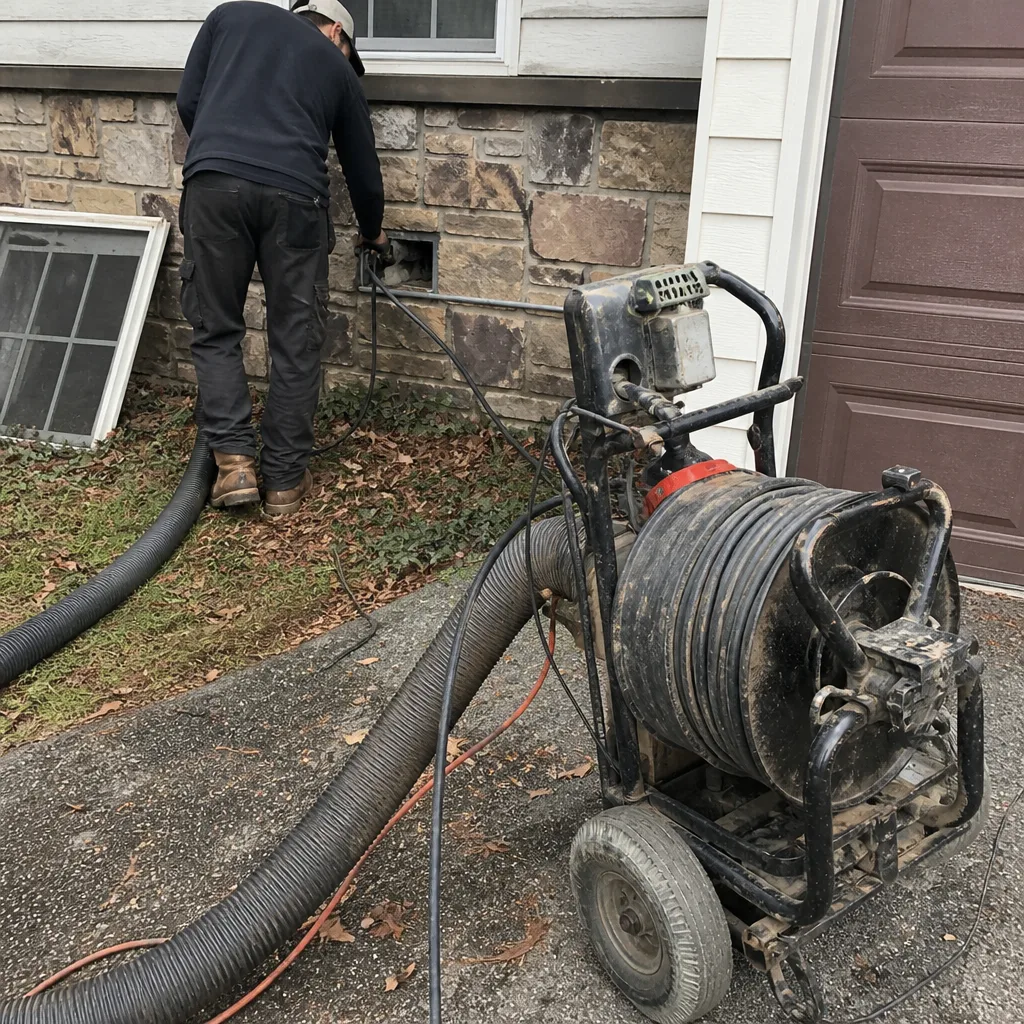 Before
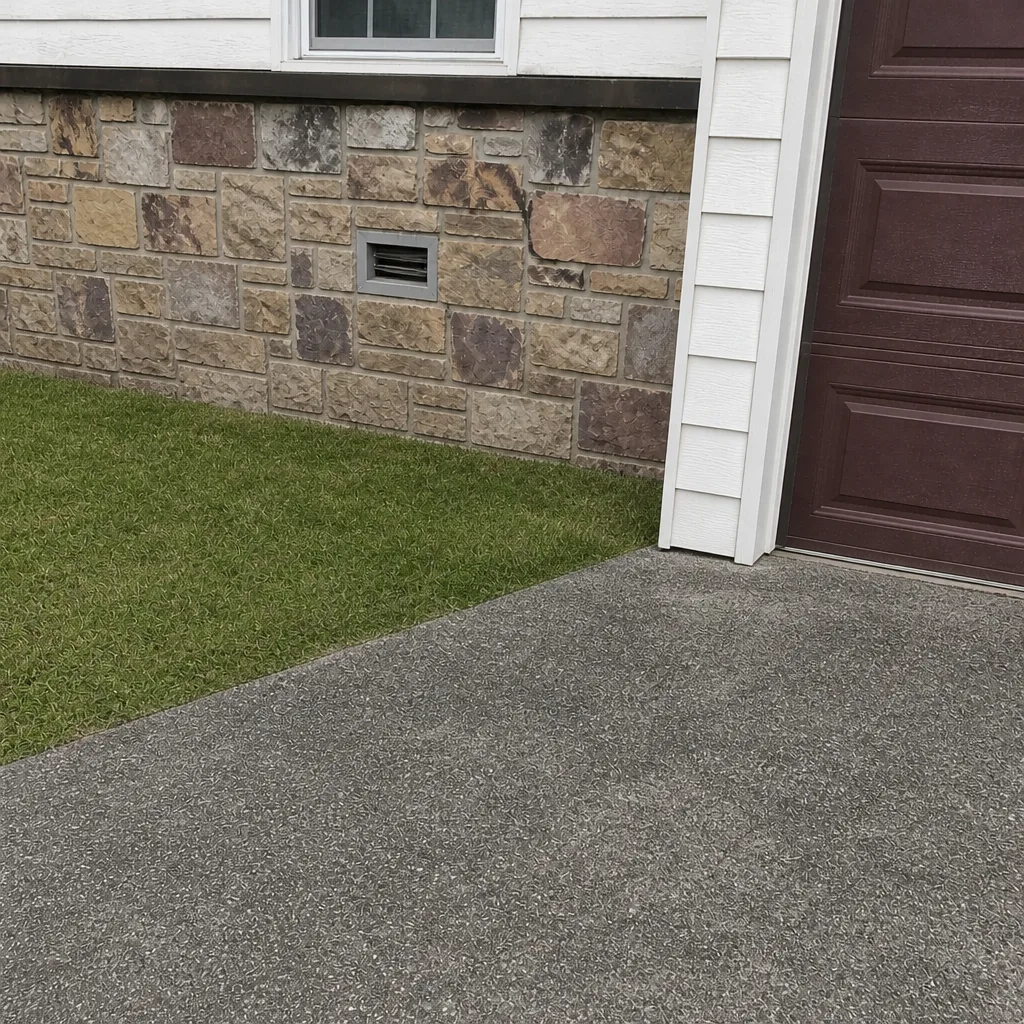 After
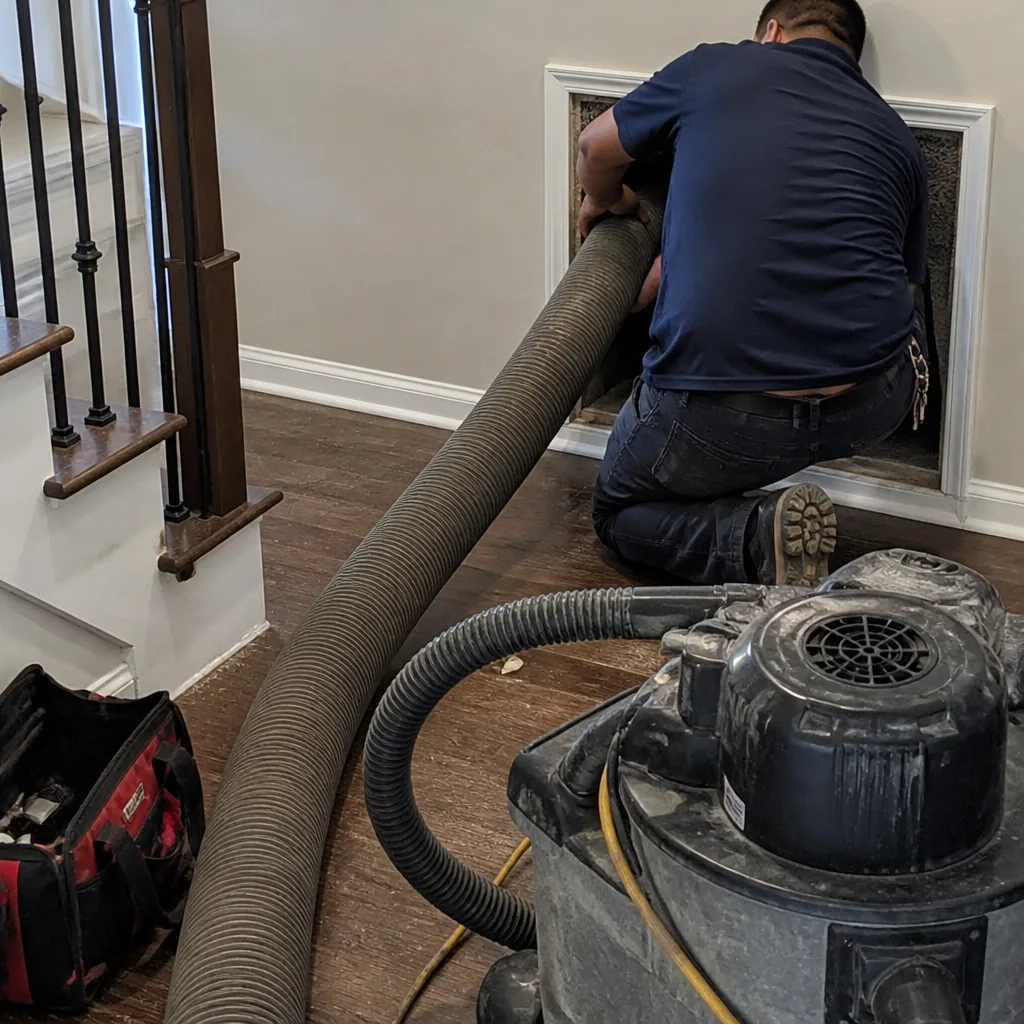 Before
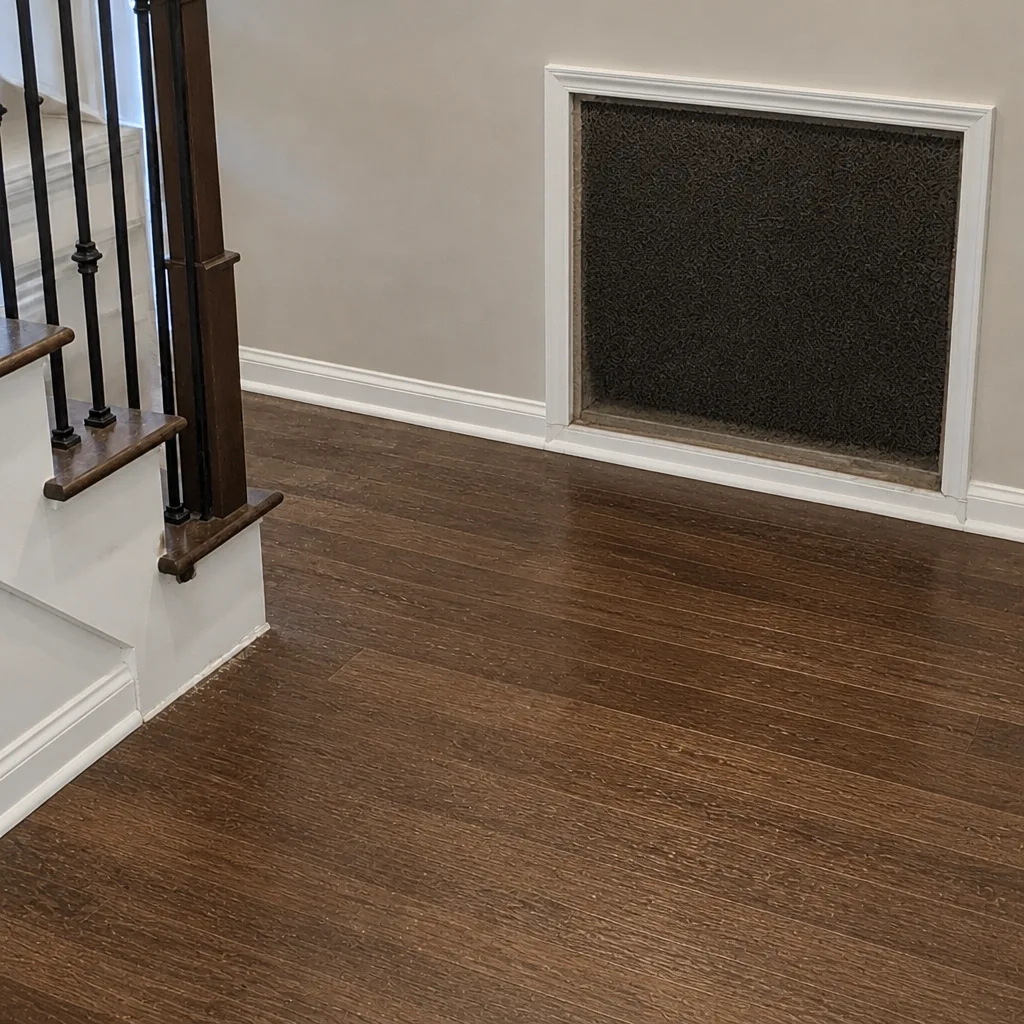 After
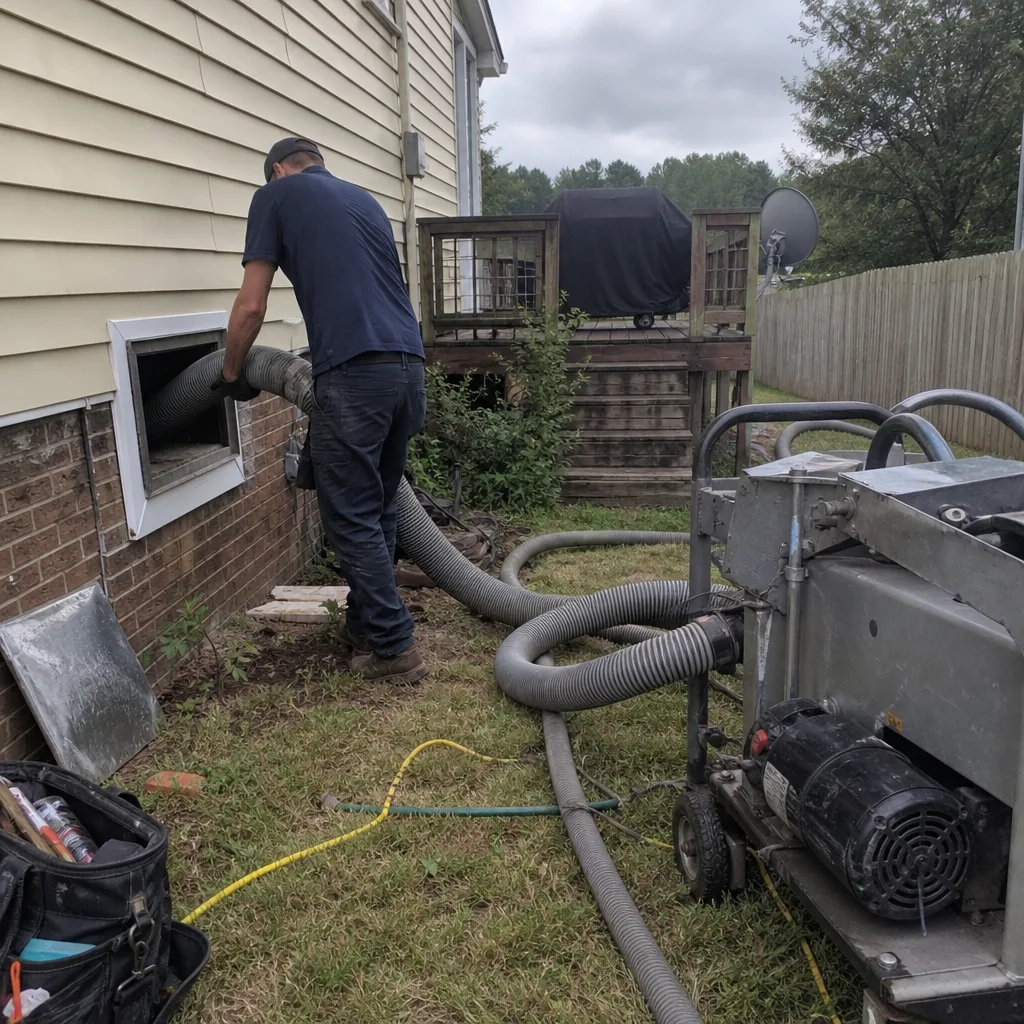 Before
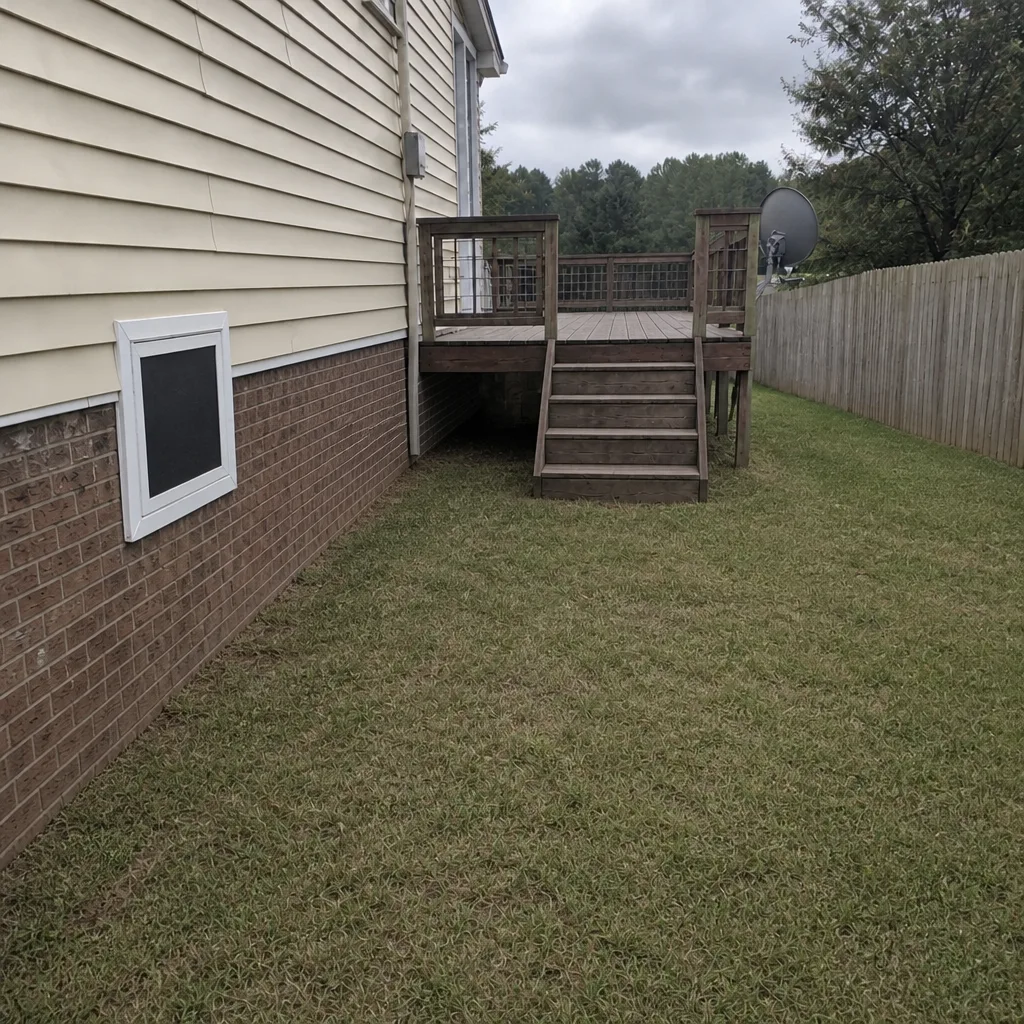 After
When to Call a Professional
Some signs are clear enough that a phone call is warranted. Persistent musty or mold-like odor coming from the supply registers. Visible dust puffing out of a register when the system kicks on. A recent renovation with heavy drywall dust, or a water intrusion event that touched the duct system. Unexplained allergy flare-ups that worsen indoors. A dryer that’s running hot or taking unusually long to dry a load. Rodent activity discovered in the ductwork or attic. And older Knoxville homes with visible gaps in duct runs that pull dirty attic or crawlspace air into the system. Each of these situations is evaluated properly on site rather than over the phone.
Knoxville Air Duct Cleaning Experts offers free estimates in Knoxville. Call (844) 798-0184. We answer 24/7. Fast dispatch from 7am to 7pm, Sunday through Friday.
Frequently Asked Questions
A typical single-family home in Knoxville runs in the several-hundred-dollar range for a whole-system clean, depending on system size and contamination level, and the written estimate sets the final price. Larger homes or multi-system properties will price higher. The cost of sanitizing, sealing, or repair is added only if those steps are warranted. Call (844) 798-0184 for an exact quote. Estimates are free.
Because they cover less. A low quote typically means a vent-and-register vacuum rather than a full air pathway clean, and the plenum, air handler, and branch runs may not be touched. That’s a different product, not the same product for less money. Always ask which components are covered before comparing prices. Call (844) 798-0184 for a free estimate with the scope spelled out.
Ask for two things: before-and-after camera footage showing the interior of the ducts, and a static pressure reading taken before and after cleaning. The camera footage shows the change visually; the static pressure reading shows the system is moving air more easily. If a company can’t provide both, you’re paying on faith. Call (844) 798-0184 to book a job with both.
There’s no one schedule for every home. A system with no recent renovation, no pets, and a well-maintained filter can go years between cleanings. A home with allergies, recent renovation, pets, or visible dust issues usually needs it more often. The best guide is condition, not the calendar, and a free on-site assessment sorts that out quickly.
It does affect the type of work needed rather than the frequency. Humid summer air combined with a cooled coil surface creates biofilm on the coil and surrounding surfaces, and that’s a separate treatment step from dust removal. If you smell something musty that you can’t locate, the coil and plenum are the first places to check. Call (844) 798-0184 for an assessment.
Yes. We serve homeowners and property managers across Knoxville and the surrounding area, including neighborhoods throughout the city and nearby communities in East Tennessee. Current service details and scheduling are available on request. Call (844) 798-0184 for the current availability.
The Bottom Line
Air duct cleaning in Knoxville works when the whole air pathway is treated as one connected system, and it falls short when the job stops at the vents. The plenum, the return chase, and the branch runs are where the heaviest load sits in this climate, and the red-clay dust and humid summers create a specific contamination profile that differs from drier parts of the country. A complete job sequences the work, uses professional-grade equipment like Rotobrush and Nikro extraction, and closes with proof: camera footage and a static pressure reading. Sealing leaks in the same visit preserves the clean result. Expect several hundred dollars for a standard system, priced per job by written estimate, and be wary of a quote that can’t name the components it covers. If you want the full pathway handled by people who do this every day, we’re here.
Call (844) 798-0184 for a free estimate. We answer 24/7. Fast dispatch from 7am to 7pm, Sunday through Friday.
Written by the team at Knoxville Air Duct Cleaning Experts.